Doors 7:30p
Program 8:00p
Tickets $10

- This event has passed.
Nov 9, 2025 at 7:30 pm
The Said and the Unsaid
With Stephanie Barber, Jonathan O’Grady, Maryam Tafakory and Frank Sweeney
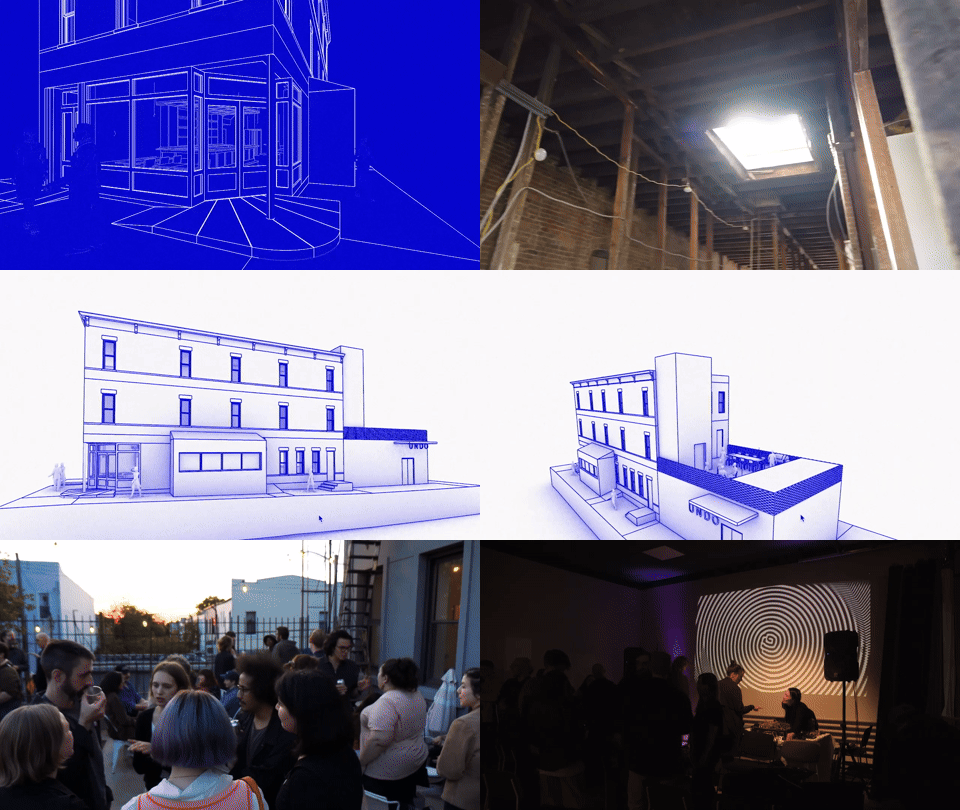
UnionDocs
352 Onderdonk Ave
Ridgewood, NY
We’re thrilled to welcome aemi to UnionDocs for the NYC stop of their 2025 touring program, an annual selection platforming some of the most exciting moving image work by Irish artists in conversation with key international works. The Said and the Unsaid is a showcase that spotlights these bold new moving-image works and this year’s program includes new Irish films by Frank Sweeney and Jonathan O’Grady alongside work by filmmakers Maryam Tafakory and Stephanie Barber.
This eclectic program shifts from an act of deliberate and playful obfuscation (3 Peonies) to a process of attempted rediscovery (In Search of the Forenaughts Longstone) to an uncovering of media artifacts that speak to both deliberate and discrete forms of articulation in the face of state sponsored censorship (Nazarbazi and Few Can See).
Together these works describe a variety of creative means of expression borne out of a necessity to speak, however indirectly.
We’re delighted to have Daniel Fitzpatrick from aemi joining alongside filmmakers Frank Sweeney and Jonathan O’Grady for conversation after the program.
Program
3 Peonies by Stephanie Barber –
3 mins, 2017, U.S.
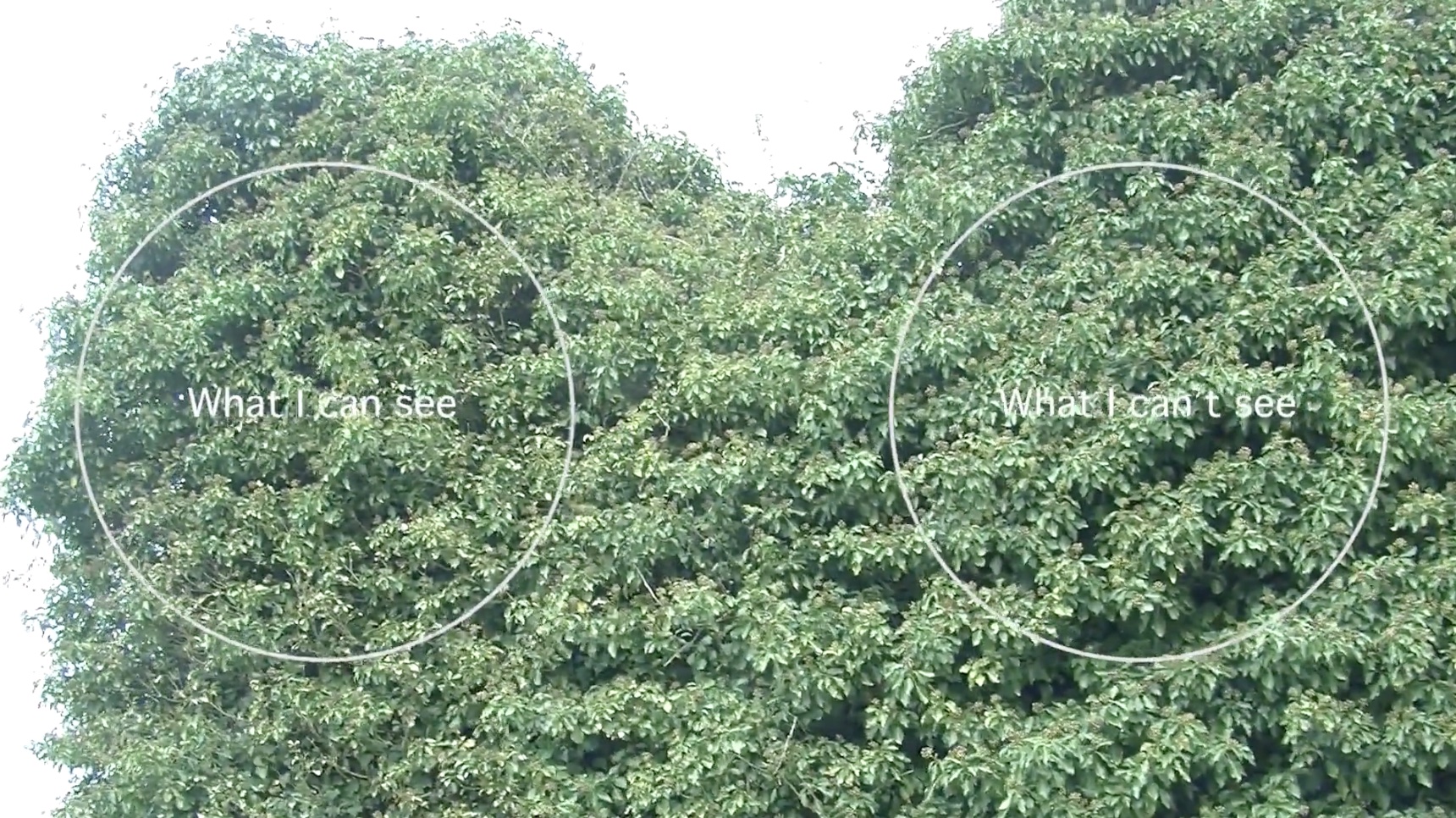
A brief, poetic 16mm film on a simple sculptural action. An experimental film in which the simplicity of the image is offset by the sonic implications. What becomes apparent is the humour possible in material interactions and the tender and sometimes melodramatic symbolism of cut flowers. What begins as a reverence for natural beauty ends up pointing towards the abstract expressionism and color field work of high modernism which, in many cases eschewed the banality of such ‘natural’ beauty. The collaged soundtrack suggests weightier concerns, gently insistent behind the flatness of the utilitarian sounds of ripping tape.
In Search of the Forenaughts Longstone by Jonathan O’Grady
12 mins, 2021, Ireland
O’Grady’s film records a pilgrimage of sorts, conducted in search of a hard-to-find menhir or standing stone within the area of Naas, County Kildare. One of three in the area, the Forenaughts Longstone is located within the grounds of a large private estate, inaccessible for visitation, or indeed, view from the nearby road. The works traces the artist’s attempt to try and reach the stone on his own accord, navigating the narrow lanes and looking for openings that might allow access to the monument. In the end the journey is a failure, leading to dead-ends and obstructed views of the land. The subsequent work becomes a way of speculating about movement through the landscape; its restrictions and potential new access points. Through the use of footage, graphic and colour interludes and text, the work mediates on the privatisation of land and heritage, inaccessibility as invisibility and trespassing as a necessary tactic for cultural reclamation.
Nazarbazi by Maryam Tafakory
19 mins, 2022, Iran/UK
Nazarbazi [the play of glances] is a film about love and desire in Iranian cinema, where depictions of intimacy and touch between women and men are prohibited.
The film focuses primarily on images of women whose bodies have been erased and victimised in post-revolutionary cinema, alluding to discreet forms of communication that operate within yet circumnavigate the censors. It attempts to touch the spaces we cannot touch, inner feelings/sensations, and untouchability beyond bodily experience, that of unspoken and unwritten prohibitions. The film uses poetry and silence as the only languages with which we can touch these spaces of socio-political ambiguities.
Few Can See by Frank Sweeney
42 mins, 2023, Ireland
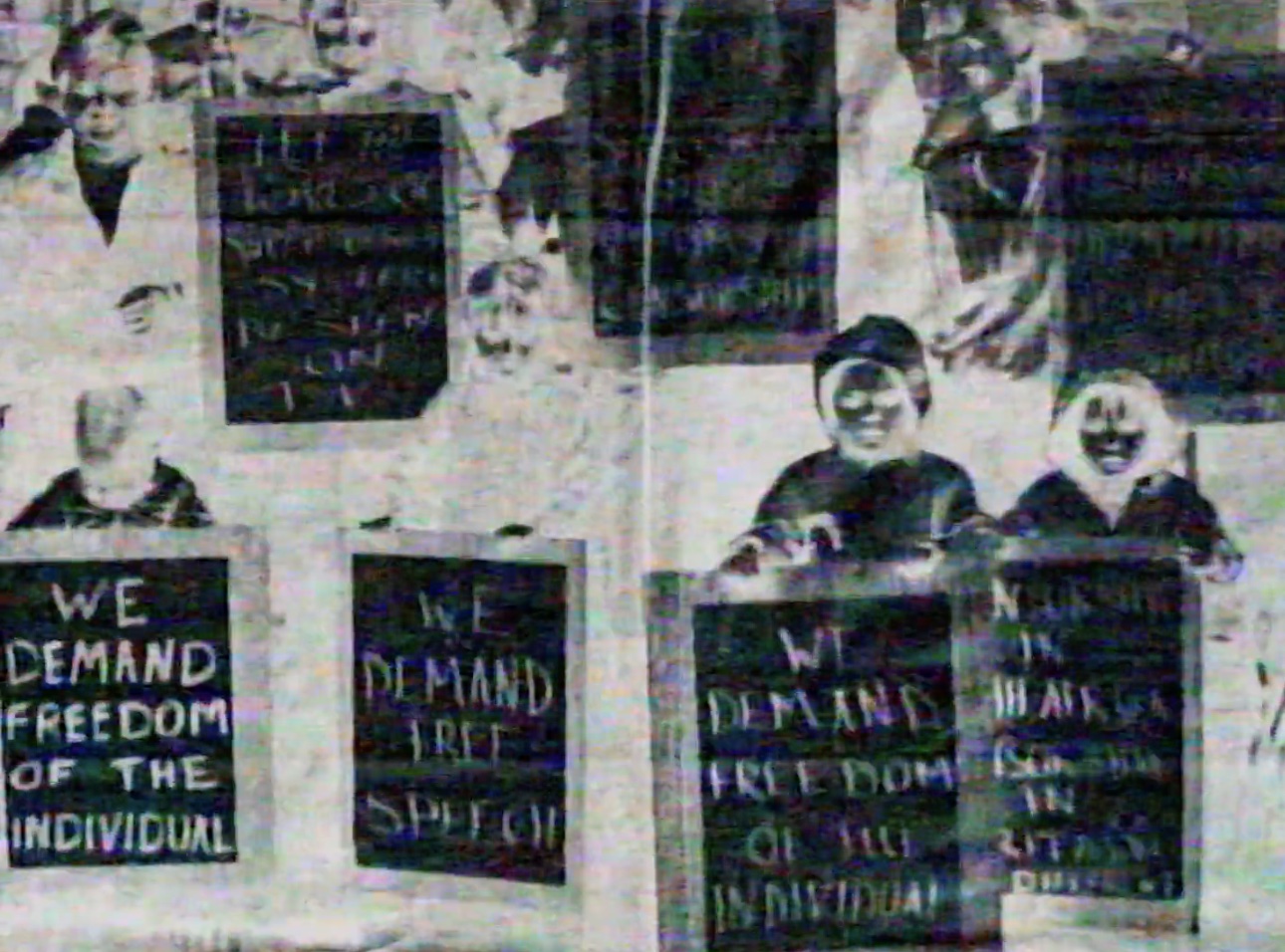
Few Can See examines the legacy of broadcast censorship of the conflict in the north of Ireland and political movements during this era. The project attempts to recreate material absent from state archives due to censorship, based on contemporary oral history interviews.
Winner of the Tiger Short Award 2024 at International Film Festival Rotterdam and received a Special Mention from the jury at the FILMADRID Awards.
Program Duration: 76 mins
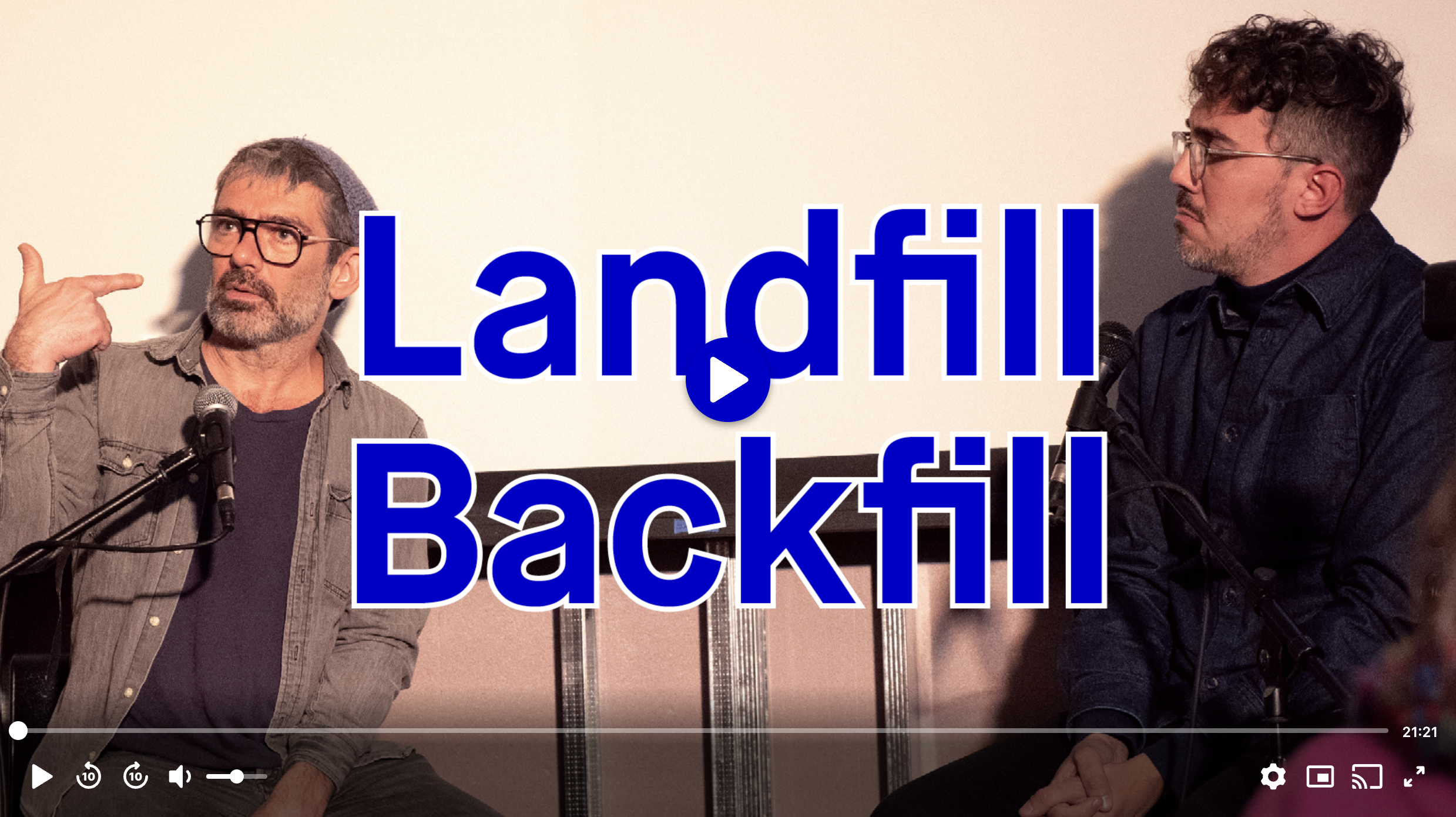
Watch the conversation between Presenter1, Presenter2 and Presenter 3 on the UnionDocs’ Membership hub.
Bios

Frank Sweeney is an artist with a research based practice, using found material to approach questions of collective memory, experience and identity through film and sound.
Recent work includes ‘Few Can See’ (winner of the Tiger Shorts Competition at International Film Festival Rotterdam, Second Diamond Award at Alcine 53, Special Mention at Filmadrid Awards, commissioned by EVA International – Ireland’s Biennial), ‘People enjoy my company’ (Best Documentary at LUFF Switzerland, IMMA 2021-22, Transmediale Berlin, BFI Southbank LSFF 2022) and ‘Made Ground’ (collaboration with Eva Richardson McCrea, Temple Bar Gallery 2021, purchased for the Arts Council Collection in 2021).
Recent awards include the Common Ground MARKING 25 Commission, the Arts Council’s Next Generation and Project Award, aemi + Sirius Film Commission & a 3 Year Studio at Temple Bar Gallery + Studios.
Maryam Tafakory works with film and performance. She was the 2024 winner of the Film London Jarman Award.
Her film, Mast-del, premiered at Cannes Directors’ Fortnight and was among Film Comment’s Best Short Films of 2023 and Sight&Sound’s Best Video Essays of 2023. Her first UK solo exhibition, I Want To Tell You What I Can’t, was one of Artforum’s Critics’ Picks of 2023. LUX London distributes her work.
Born and raised in Iran, Tafakory is a visual artist who makes textual and filmic collages that bring together poetry, speculative nonfiction, and archival material.
Exploring the different registers through which images speak or refuse to speak, her work attempts to dissect veiled acts of erasure – of bodies, intimacies, and histories. Her research-based projects consider what is often neglected and discarded as trivial or excessive, looking at historical gaps, unspoken rules, and concealed queer stories. She has an ongoing body of films, performances, and video essays in dialogue with post-revolution Iranian cinema.
Stephanie Barber is a writer and artist who has created a poetic, conceptual and philosophical body of work in a variety of media, often literary/visual hybrids that dissolve boundaries between narrative, essay and dialectic. Her work considers the basic philosophical questions of human and non-human existence (its morbidity, profundity and banality) with play and humor.
Barber’s films and videos have screened nationally and internationally in solo and group shows at MOMA, NY; The Tate Modern, London; The Whitney Museum of American Art, NY; The Paris Cinematheque; The Walker Art Center, MN; MOCA Los Angeles, The Wexner Center for Art, OH, among other galleries, museums and festivals.
Her videos are distributed by Video Data Bank and her films can be found at Canyon Cinema. Publishing Genius Press published her books Night Moves and these here separated… in 2013 and 2010 respectively. CTRL+P published a collection of her haiku, Status Update Vol. 1 in 2019 and her full-length play Trial in the Woods was published by Plays Inverse in 2021 with a second pressing in 2022.
From the Event