Performing Lost, Stolen and Misplaced Sounds
This event brings together a group of international artists and theorists who work with sounds that are in some sense illegitimate. These sounds (and modes of listening to them) are particularly contemporary. They play on textures and moods conditioned by shifting economic forces, changes in our understanding of the role of the state, and the fragmenting of identity politics. Here, the illicit listening of the eavesdropper taps into the anxieties and potentialities of an era of surveillance and privatisation. The uncanny voice of the ventriloquist speaks of the encounter of human and non-human agent, and asks: who is controlling whom? The voices of the past and the ghost in the machine haunt the proceedings and insist on a reckoning with both history and the future that is nevertheless full of gaps, multiples and indeterminacies.
This event is informed partly by notions of ‘acousmatic’ sounds, or sounds whose origins are in some way obscured or indiscoverable. As theorist Salomé Voegelin suggests, however, this is not to figure origins as singular and fixed, but to closed up thinking about context as ‘a plurality of things thinging’ (Voegelin, 2015). This focus on plurality extends to ideas of the live and recorded, so that the distinction between them is understood as dynamic and subject to interpretation.
David Helbich performing:
No Music – ‘Ohrstücke’, a performative rehearsal
No Music approaches listening as a performative act. The event triggers musical experience without being actually music.
This lecture-performance is neither a performance, nor a lecture, but rather a rehearsal for a piece, that you can take home and perform anytime you want for yourself, wherever you want. You will learn to read a score, there will be a conductor, performers (us) and audience (us as well). No sound production, still a musical progression. Introduction, development, finale. Still no music.
The acoustic results change radically with every new location, still the piece keeps its structural identity. Together, environment and composition dissolve into the responsibility of the listener him/herself; it becomes your own thing, as personal as a bodily experience can be.
Instead of a proper piece the work this is more of a practice, an attitude towards surroundings and awareness. Rules without control. Freedom with precision. Awareness without yoga.
 Johanna Linsley is a London-based artist, researcher and producer. Her ongoing collaborative project Stolen Voices (created with
 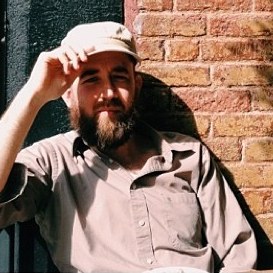 Brian House is a media artist whose work traverses alternative geographies, experimental music, and a critical consideration of data-driven practices. His project Conversnitch is a light fixture that automatically tweets overheard conversations. Brian’s work has been shown by MoMA in New York, MOCA in Los Angeles, Ars Electronica, Cincinnati Contemporary Arts Center, Eyebeam, Rhizome, and Los Angeles Contemporary Exhibitions, among others, and has been featured in publications including WIRED, TIME, The New York Times, SPIN, Metropolis, and on Univision Sports. He is currently a doctoral student at Brown University and a fellow at the Tow Center for Digital Journalism at Columbia University.
 Laure Fernandez is a researcher in the performing arts. Her thesis, defended in 2011, focused on theatricality in the visual arts (1960-2010). A Postdoctoral Research Fellow at the Drama, Theatre & Performance department of University of Roehampton (London) and associate researcher at Thalim-CNRS (Paris), she co-directs the NoTHx seminar (Nouvelles Théâtralités / New Theatricalities) at Théâtre Nanterre-Amandiers (Paris), dedicated to the evolution of performance creations post-2000 and to the critical and analytical renewal for which the study of these works often seems to call. Since 2012, she is a lecturer for the Parc de la Villette in the context of the “Aesthetics of contemporary dance” and “Introduction to contemporary theater scene” cycles that she co-created. Laure is working on the question of ventriloquism and the dissociated voice in the framework of various projects on the sound of theatre run by Marie-Madeleine Mervant-Roux (CNRS).
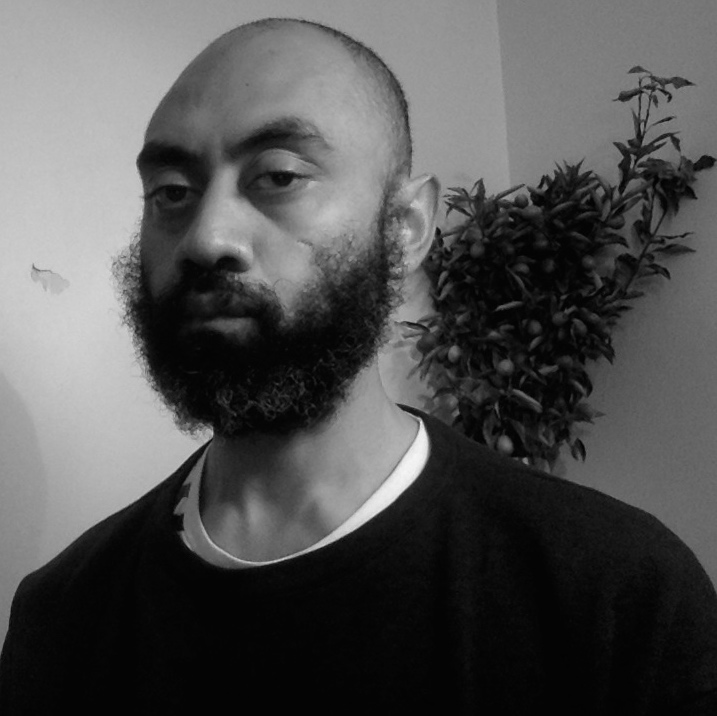 Brian Fuata was born in Wellington, New Zealand in 1978 and migrated to Australia in 1985. He is a Sydney based artist working in text and performance characterized by improvisation and interdisciplinarity. Fuata uses a range of sites to develop and present performance including theaters, art galleries, mobile phone text messages, and the internet – most notably including the format of the email. Fuata purposely works across such sites to make performances that are responsive to their immediate environment. The cultural context of it, by which the way it is read and integrated into the dialogue of other art practices, social and political contexts is paramount.
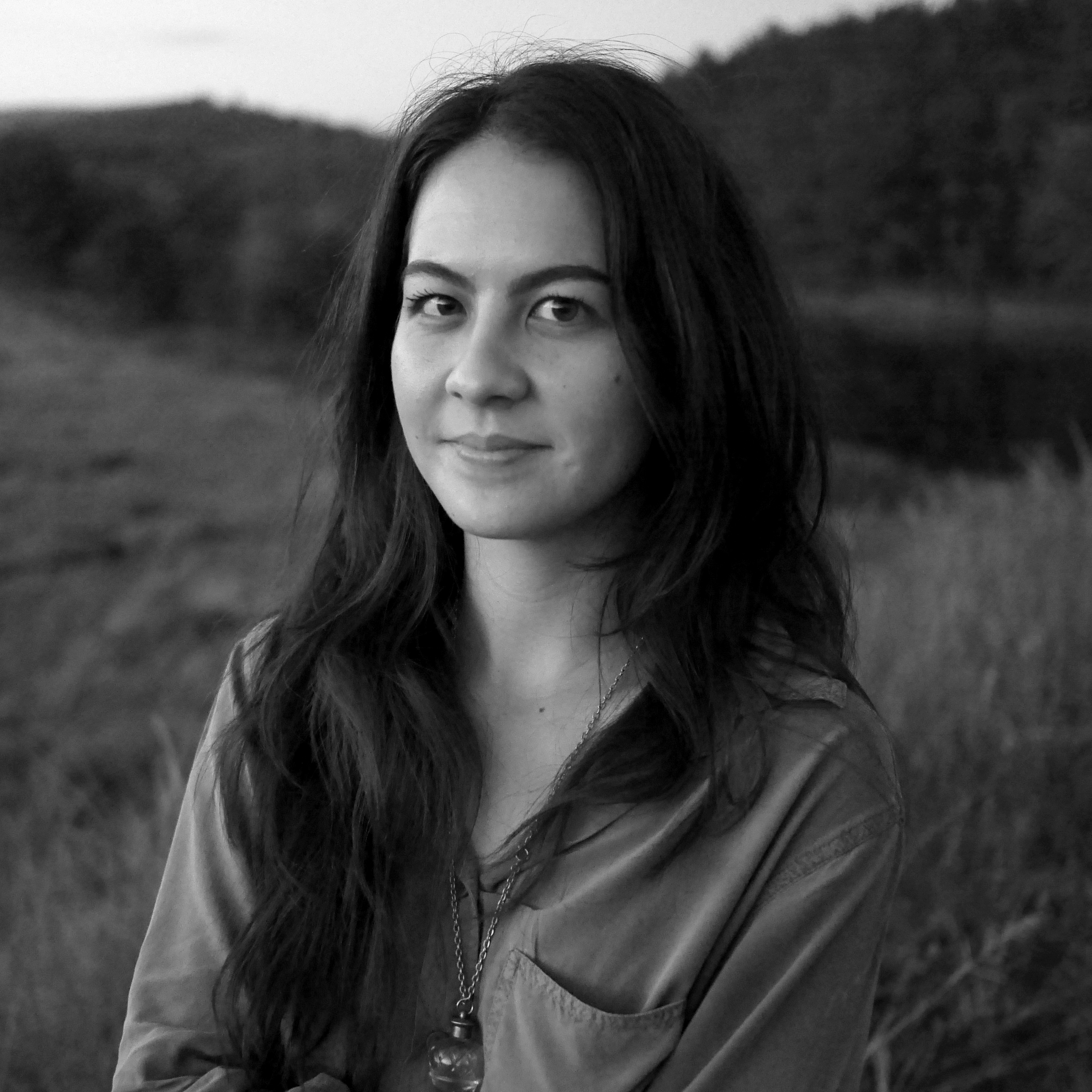 Alison S.M Kobayashi is an artist working in video, performance, installation and drawing. She now lives in Brooklyn where she is the Special Projects Director at UnionDocs. In her work, Kobayashi performs a variety of characters inspired by Kobayashi’s extensive collection of lost, discarded, and donated objects. Through repeated interaction with the objects (listening, transcribing, re-enacting, playing) narratives and imagery begin to manifest themselves and inspire performances, videos, installations, and drawings. Kobayashi’s short videos have been exhibited and screened widely in Canada, the United States, and overseas. She was a guest artist at the 2008 Flaherty Film Seminar, and her body of work was a Spotlight Presentation at Video Out, Jakarta International Film Festival, Indonesia. In 2012, she was commissioned by Les Subsistances in Lyon, France, to produce her first live performance, Defense Mechanism. She is currently developing her second live performance.