
Doors 4:00p
Program 4:30p
Doors 7:00p
Program 7:30 p
Tickets $12

Doors 4:00p
Program 4:30p
Doors 7:00p
Program 7:30 p
Tickets $12
UnionDocs
352 Onderdonk Ave
Ridgewood, NY
We’re so happy to be a part of the monthlong city-wide celebration of Ken and Flo Jacobs: The Whole Shebang! It’s a fourteen-venue expanded cinema salute to two of experimental cinema’s most beloved icons.
For this occasion, UnionDocs will present a two-part screening organized with Hanna Rose Shell who will be joined by the city-wide celebration instigator Andrew Lampert, on Sunday April 12th featuring three monumental films from the Jacobs’ ouevre.
This program, LIVING ARCHIVE, mines the depths of historic actuality in film and home movies to reveal perceptual histories of surveillance, displacement, family, and communication across three works by Ken Jacobs: New York Ghetto Fish Market 1903 (2006), Urban Peasants (1975), and Jerry Takes a Back Seat, Then Passes Out of the Picture (1987).
Ken (1933–2025) and Flo (1941–2025) were inseparable sweethearts and creative partners from the day they met in 1962, and while their passing last year leaves us bereft, it also provides a welcome opportunity to survey their enormous and extraordinary film and digital oeuvre. The Whole Shebang represents an unprecedented aligning of venues across the city, all of whom presented and championed the Jacobs’ uncompromising output during the last six-plus decades. Featuring key works, many theatrical and world premieres, and plenty of deep cuts, this sweeping festival serves as both a remembrance and an introduction to the duo’s remarkable achievements and impossible-to-categorize genius.
As a heralded filmmaker, distinguished professor at Binghamton University, and undeniable presence for so many decades, Ken Jacobs majorly impacted global cinema culture with anarchic wonders like Blonde Cobra (1963), Little Stabs at Happiness (1963), Star Spangled to Death (1956/2004), and the structuralist classic Tom, Tom, the Piper’s Son (1969). Beginning with Flo Rounds a Corner (1999), he went on to produce an unprecedented array of space- and mind-bending digital videos that, in many ways, brought him full circle to his early days as a painter. Florence Jacobs née Karpf was Ken’s partner at every turn and his prime collaborator in the trailblazing live cinema and shadow-play performances they began presenting in the mid-1960s. Whether reworking early silent film footage with the 16mm double-projection “Nervous System” or projecting phantasmagorical 3-D images with their “Nervous Magic Lantern,” Ken and Flo produced unfathomable, homespun works that pushed the possibilities of film and digital cinema beyond all expectations.
Come through for this evening that unfolds in two parts. We invite some milling about and toasting to Jacobs’ impact on the cinematic form during the lengthy yet kinetic and absorbing New York Ghetto Fish Market. We will then conclude with the iconic New York feature Urban Peasants, preceded by Jerry Takes A Back Seat, with a conversation led by Hanna Rose Shell & Andy Lampert to follow.
This collective tribute organized by Andrew Lampert will unfold over April across 30 days with screenings at partner venues like:
L’Alliance New York, Anthology Film Archives, BAM Cinema, Film-Makers’ Cooperative, Film at Lincoln Center, Light Industry, Metrograph, Millennium Film Workshop, The Museum of Modern Art, Museum of the Moving Image, Rockaway Film Festival, The Roxy Cinema, Spectacle Theater.
Each venue has created its own unique program, and works will not repeat between theaters. Information on individual screenings, as well as guest presenters, will be available on their respective websites and calendars.
The festival also helps celebrate the publication of Ken Jacobs: I Walked Into My Shortcomings, the first book to gather this seminal artist’s writings, teachings, and interviews. Published by The Visible Press, in association with Anthology Film Archives, the book will be available in April 2026.
Extra special thanks to Andrew Lampert, Nisi Ariana, Aza Jacobs, and Diaz and. to The Filmmakers Co-op for supporting this program.
Program
The film will be introduced by Hanna Rose Shell. We invite folks to circulate a bit in and out during this durational work for a social viewing. The bar will be open.
2006, 132 min, b&w, sound
WARNING: This work contains throbbing light. Should not be viewed by individuals with epilepsy or seizure disorders.
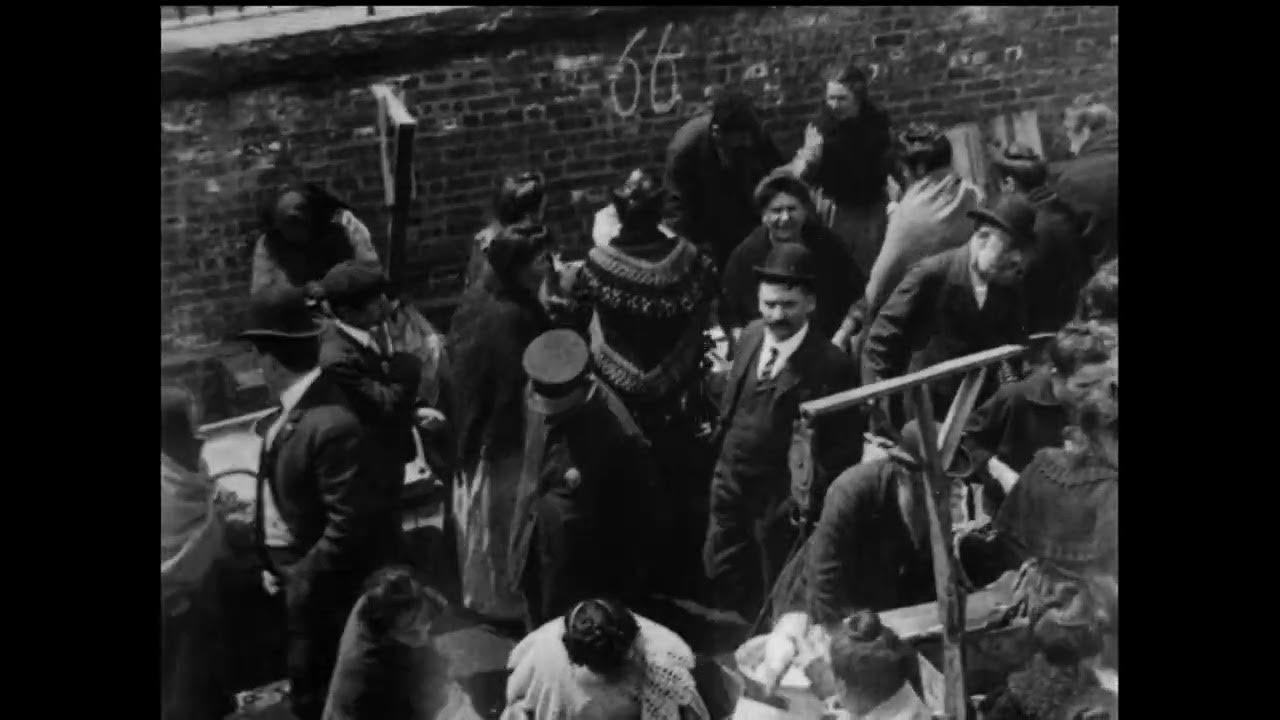
In New York Ghetto Fish Market 1903, Jacobs uses archival film footage of New York’s Lower East Side as his source material. The vintage film, shot by Thomas Edison in 1903, documents immigrant Eastern European Jews at a crowded marketplace. Digitally manipulating the original film, Jacobs crafts a performative, improvisational investigation; he focuses on individuals, slows down and reverses the footage, and creates illusions of three-dimensionality through stroboscopic effects evocative of his Nervous System performances. Jacobs considers the social and cultural context of the original film, as well as the materiality of film as a medium.
Production, Image and Sound Organization: Ken Jacobs. Cello: Tom Cora. Voice, Toy Instruments, Electronics: Catherine Jauniaux.
This program will be introduced by Hanna Rose Shell and she’ll be joined by Andy Lampert for a conversation following the program.
1987, 16mm, color, silent, 11 min
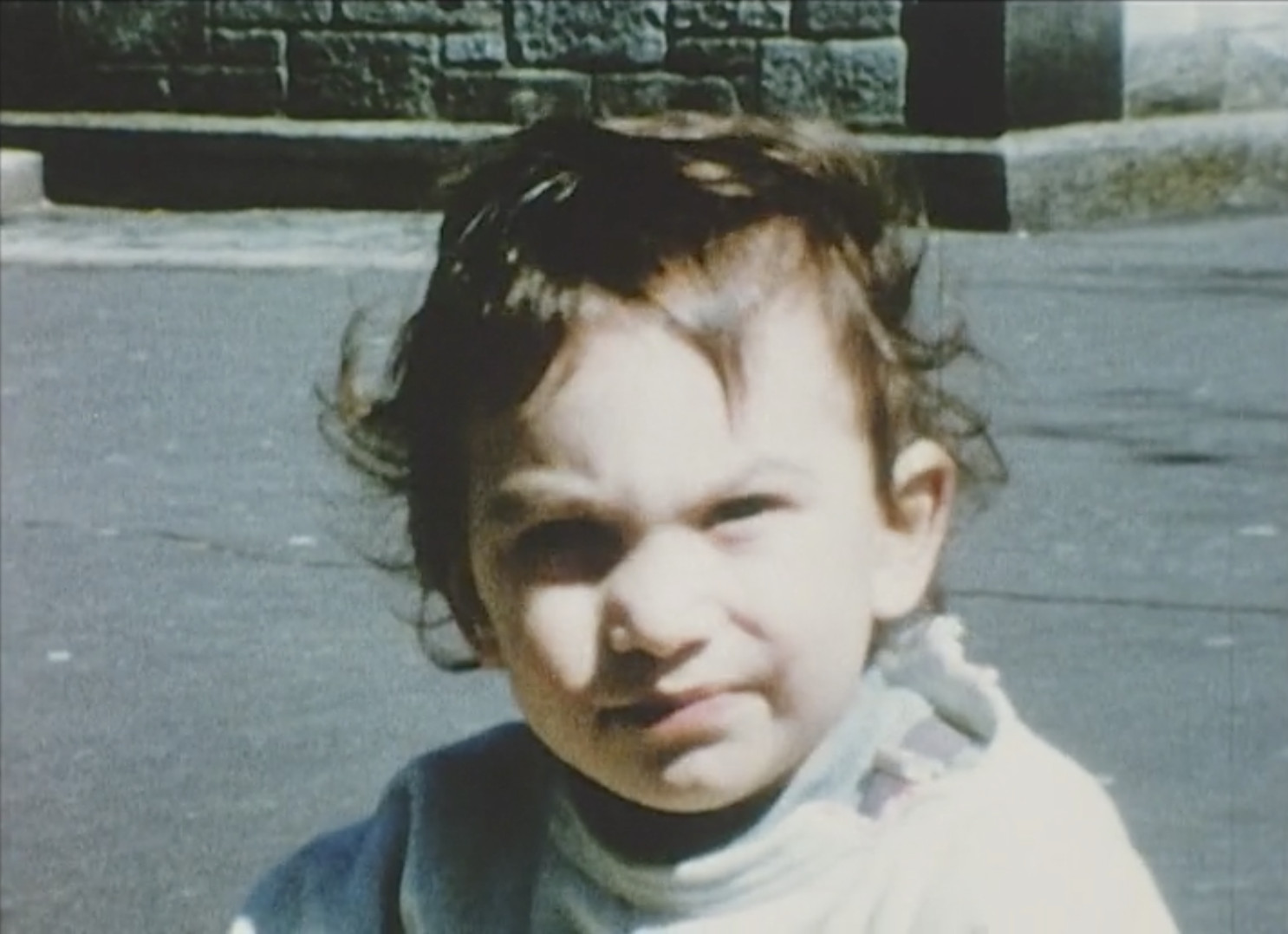
In the backyard with the inimitable Jerry Sims. Shot in 8mm in 1975, edited and transferred to 16mm in 1987
1975, 16mm, color and b/w, sound on separate reel(s), 60 min
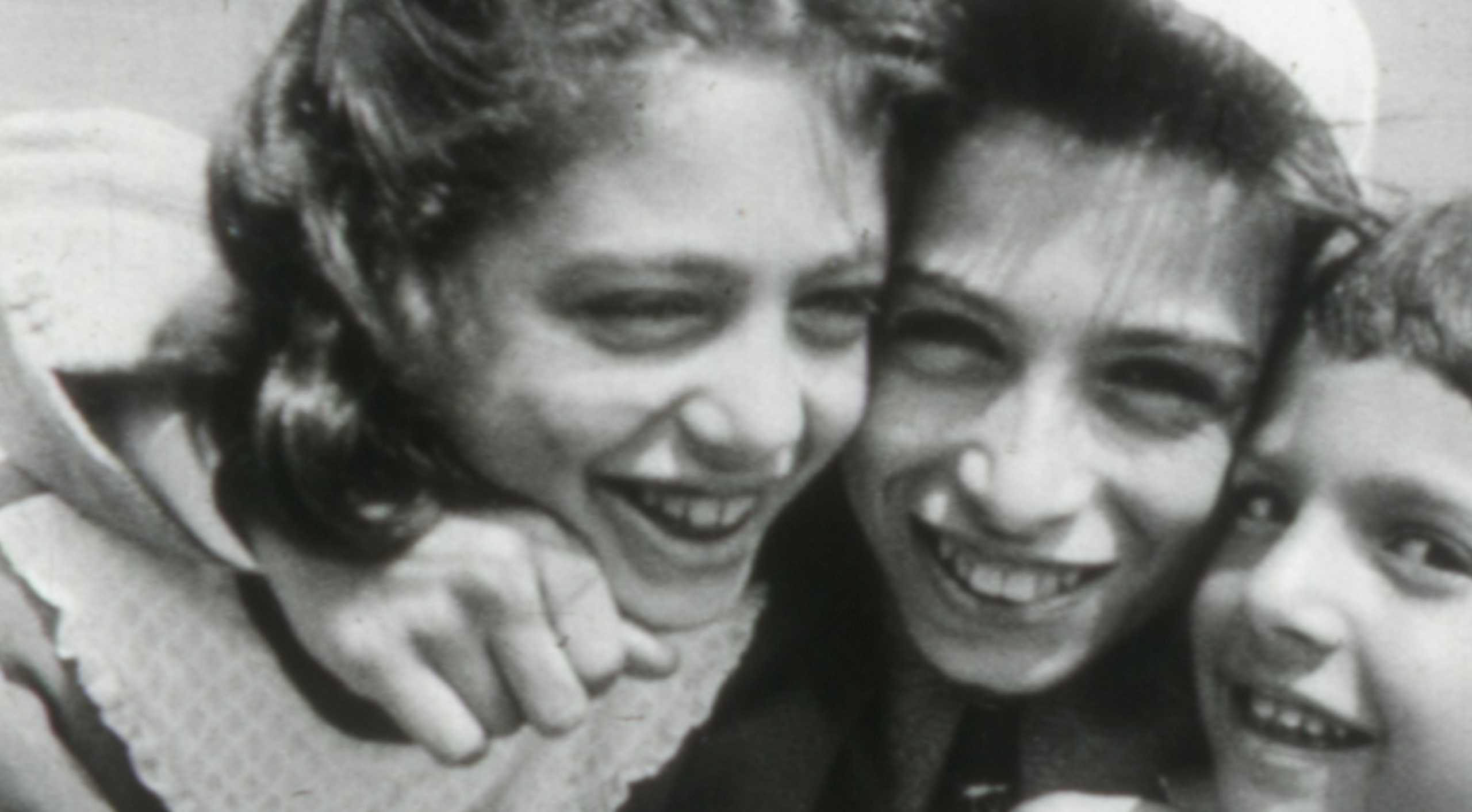
Filmed by Stella Weiss and family, chanced assembled by Ken Jacobs from uncut 100-foot lengths. Alternating sound and image. Image must travel at silent speed. Sound o tape precedes and follows silent image. 40 minutes film plus ca. 12 minutes sound. My wife Flo’s family as recorded by her Aunt Stella. The title is no intended put-down but a simple statement of fact, as I see it. Brooklyn was a place made up of many little villages; a near-shtetl is pictured here all in the space of a storefront
Program Duration:
4:30PM Screening — 132 min
7:30PM Screening – 71 min
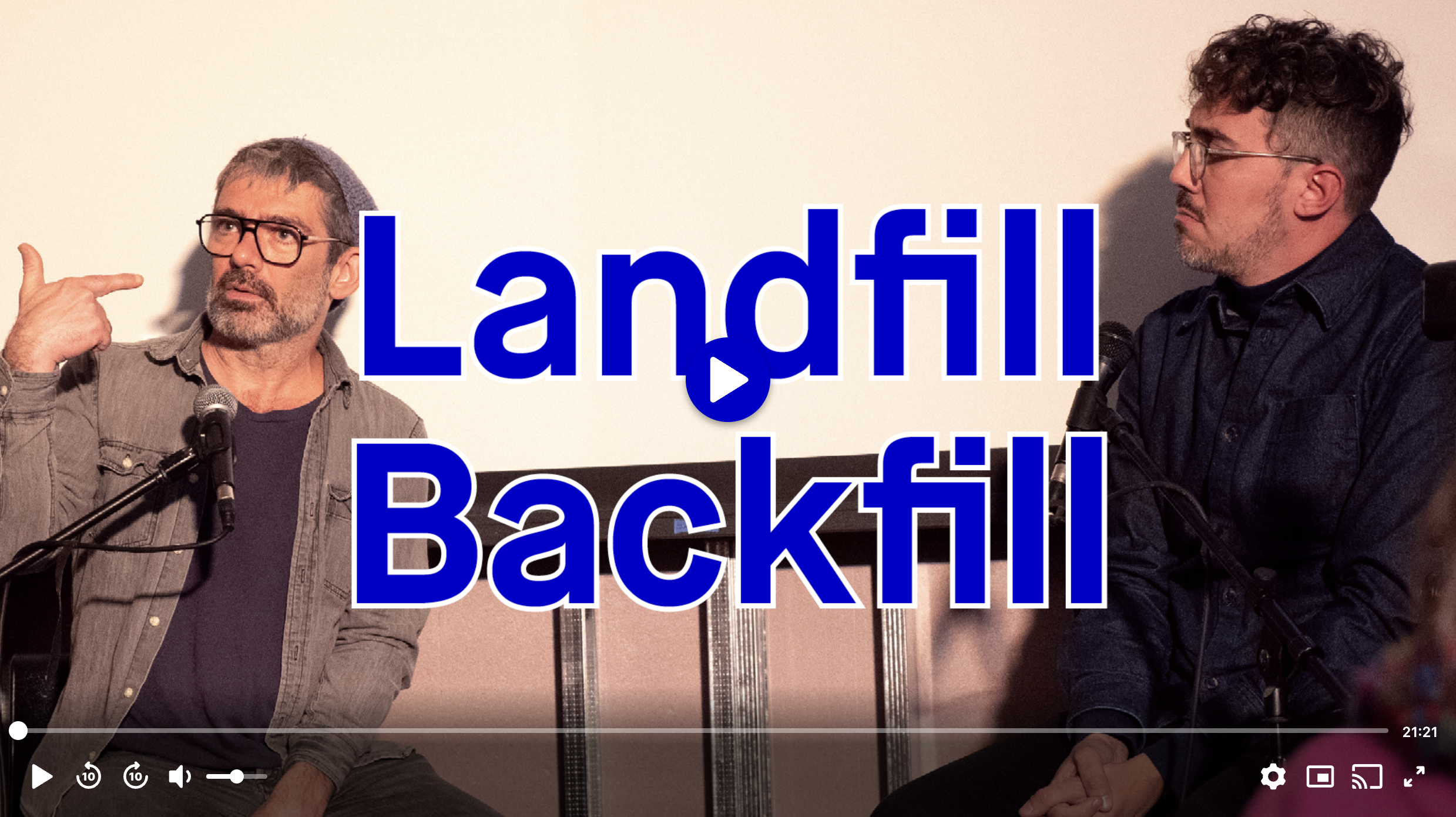
Watch the conversation between Presenter1, Presenter2 and Presenter 3 on the UnionDocs’ Membership hub.
Bios

One of the founders of the American avant-garde cinema, Ken Jacobs (1933 — 2025) worked ceaselessly and boundlessly in film, video and moving image performance for over fifty years. Jacobs began working in a mode of guerilla cinema, shooting anarchic and exuberant – yet also politically astute – theatrics in the streets of his native New York in the early 1950s, including a number of prescient and Beat infused works – Little Stabs at Happiness, the shorts included in The Whirled – made with a very young Jack Smith.
Fascinated with early cinema and experimental film from a young age, Jacobs gradually turned to found footage as a dominant inspiration, a breakthrough marked by his seminal deconstruction of cinematic narrative and illusionism Tom, Tom the Piper’s Son (1969), which famously manipulates and expands a 1905 film of the same name to create a breathless and revelatory work of pure cinema. Early “primitive” cinema, and increasingly, nineteenth century photography, has remained a touchstone in Jacobs’ work and a principal tool to launch an extended critique of the aesthetic, ideological and technological limits defining film and the cinematic apparatus itself.

Hanna Rose Shell studies aesthetics, media archaeology, textiles, and the interface of art and science; her scholarship takes the form of text and film. Shell’s book on camouflage, Hide and Seek: Camouflage, Photography, and the Media of Reconnaissance, published by Zone Books in 2012, has since been translated into French (Zones Sensibles) and inspired her own and others’ multimedia works. Shell has published widely in scholarly and popular journals on subjects including taxidermy, waste processing, and the history of chronophotography. She served as co-editor for a volume on science studies published Princeton University Press and previously released an edited reprint of The Extermination of the American BisonTechnology and Culture, her scholarship has appeared in the publications Journal of Visual Culture, Configurations, History and Technology, Bidoun, Technology and Culture, Natural History and Cabinet among others.
Shell’s 2020 book, SHODDY: From Devil’s Dust to the Renaissance of Rags (University of Chicago Press), examines recycled textiles as transformative media forms through the lenses of aesthetics, material culture, history, and critical theory. It dovetails with a series of experimental documentary shorts and a textile installation in the Czech Republic on the subject of waste, recycling and old clothes. Her films and media works have appeared worldwide, at art and film venues including The Museum of Modern Art, Anthology Film Archives, the ZKM Center for Art and Media, Machine Project, Slamdance, Black Maria Film and Video Festival, Machine Project, the Zimmerli Art Museum.
Prior to her arrival at UC-Boulder in 2018, she was Associate Professor at the Massachusetts Institute of Technology, before which she was a junior fellow at the Harvard Society of Fellows. Shell also taught previously at the Rhode Island School of Design. Jointly appointed in the Department of Cinema Studies and Moving Image Arts and the Department of Art & Art History, she teaches a range of undergraduate and graduate courses.
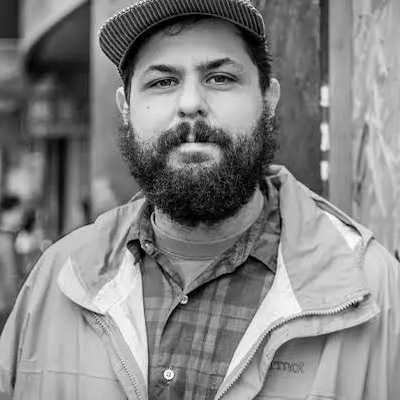
Andrew Lampert has been making films, videos, performances and photographs since the late 1990s. His work is regularly presented in international contexts with past shows including: The Whitney Museum of American Art, Centre Pompidou, The Getty Museum, The Solomon R. Guggenheim Museum, PS1/MoMA, The New York Film Festival, The Toronto Film Festival, The International Short Film Festival Oberhausen, and The Art Gallery of Ontario among many other venues.
A frequent writer on art and cinema, Lampert edited THE GEORGE KUCHAR READER (Primary Information, 2014), co-edited two volumes of HARRY SMITH COLLECTIONS CATALOGUE RAISONNE (J&L Books, 2015), co-edited MANUEL DE LANDA: ISM ISM (J&L Books, 2018), TONY CONRAD: WRITINGS (Primary Information, 2019) and WILLIAM WEGMAN: WRITING BY ARTIST (Primary Information 2022). He co-writes the monthly advice columns HARD TRUTHS and HARD CHOICES for Art in America with Howie Chen. He is co-publisher and co-editor of The Further Reading Library imprint with Christine Burgin.
From 2002-2015, Lampert served as Archivist and Curator of Collections at Anthology Film Archives, where he was responsible for managing the archive, preserving films and videos, and programming public screenings. He has restored over 300 classic and obscure moving image works by iconoclastic artists like Vito Acconci, Stan Brakhage, Robert Breer, Bruce Conner, Tony Conrad, Maya Deren, Hollis Frampton, Robert Frank, Ken Jacobs, Danny Lyon, Marie Menken, Carolee Schneemann, Paul Sharits, and Stuart Sherman to name only a few.
Lampert has taught at CUNY City College, Purchase College, The New School for Social Research, Cooper Union and NYU. He is one half of the creative firm Chen & Lampert, and his videos are distributed by Electronic Arts Intermix.
From the Event

UnionDocs is grateful for support from:

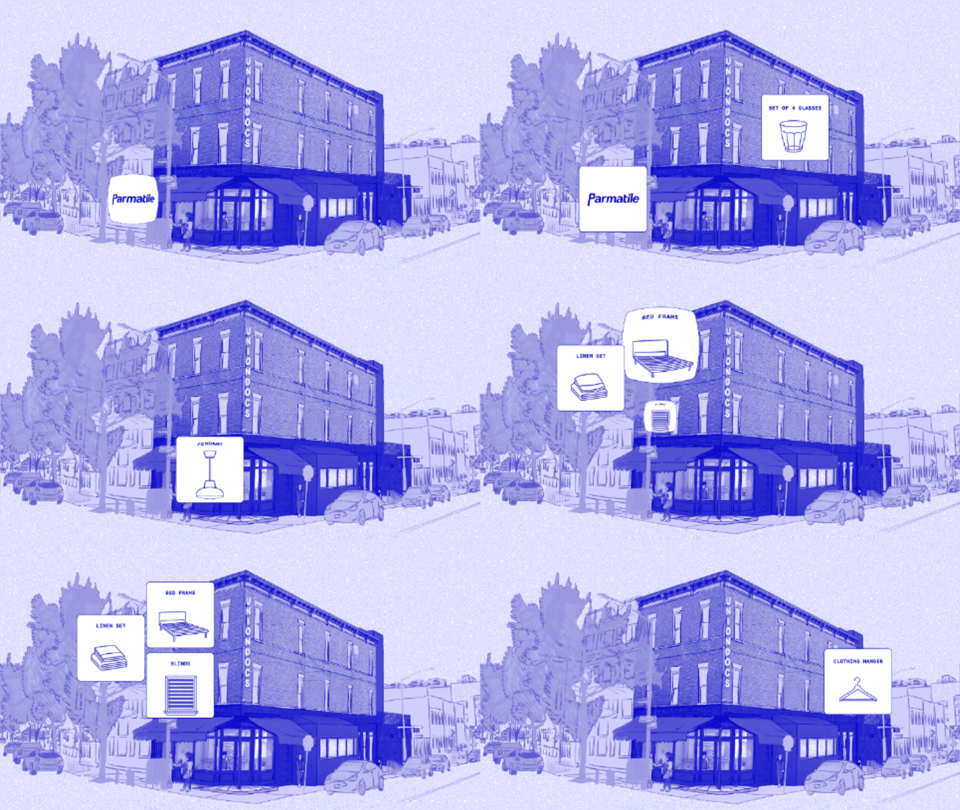
Shop our Gift Registry and name an item to be honored as a part of UNDO history. Learn more about this ambitious renovation of our new permanent headquarters and artist residency in Ridgewood, Queens!
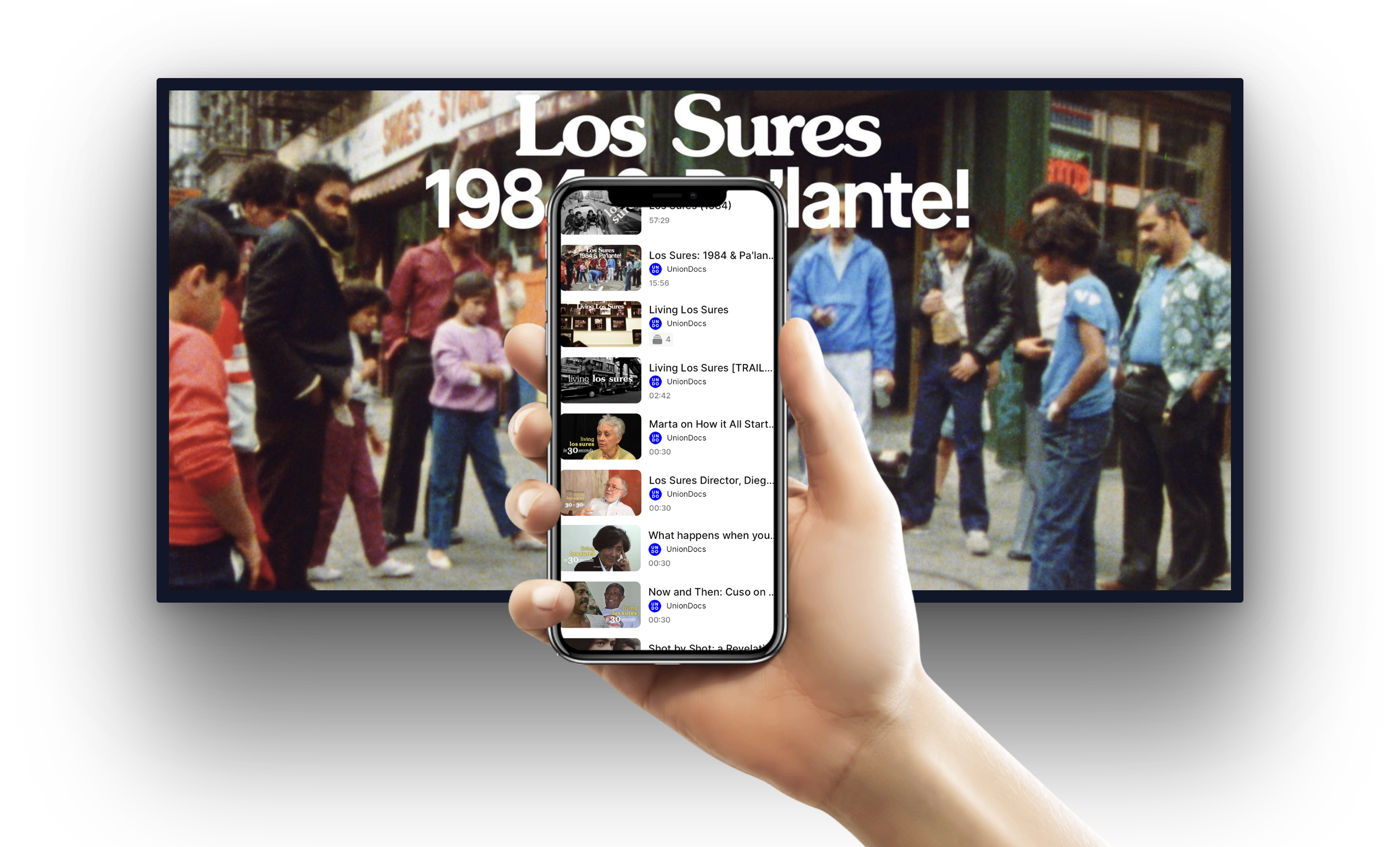
Free access to in-person events, and access online to watch some of the most hard-to-find and groundbreaking documentary films from around the world. Plus select workshops, artist talks and event conversations from our programs.