
This workshop is SOLD OUT.
Please sign up for the waitlist below to receive updates regarding any openings or similar future opportunities.



This workshop is SOLD OUT.
Please sign up for the waitlist below to receive updates regarding any openings or similar future opportunities.
“Style is a very simple matter; it is all rhythm.” – Virginia Woolf
Join us for this 3-day workshop, led by acclaimed director-editor Iva Radivojević (When the Phone Rang, Evaporating Borders), as we explore putting form to raw material in the editing room, and the significance of rhythm for the editing process of non-fiction filmmaking.
Film editing is much like writing words on paper for poetry, or arranging notes on a partition for a piece of music. Every film or story, like a song or a poem, has its own shape, its own heartbeat, its own rhythm. Components like language, character, space and movement might act as guides towards finding a musicality or choreography of a film. In this workshop we’ll be exploring the ways in which rhythm is fundamental to the editing process, and asking how different rhythms impact a film’s style and meaning.
Workshop sessions will prompt participants to ask themselves questions like: what’s the story, its shape and what tempo does it call for? What rhythms already exist in my material, and how can I be attentive to it when reviewing footage? What tools are at my disposal to infuse rhythm into the editing process? How can factors like tempo, cadence and duration affect the tone, style and storytelling of my film? How does editing relate to language (my language, the film’s language, cinema language), and how does the meter of different dialogue affect the editing process?
Iva will propose a series of prompts and exercises based on her experience both as director and editor to provoke reflection and discussion on the subject of rhythmic editing. She’ll be joined by a diverse group of guest facilitators including: filmmaker Deborah Stratman will unpack how she approaches rhythm when editing her films, the poet Corina Copp will speak to the cadence of language, and editor and music editor Jay Rabinowitz (longtime Jim Jarmusch collaborator) will reflect on a career in the editing room.
We hope this 3-day intensive will inspire participants with new ideas and fresh approaches to editing their own material. We’ll be providing a supportive environment, encouraging participants to share their own work for constructive feedback and instructive exchange on works-in-progress. Seats are limited, so be sure to sign up soon!
Open to everyone, though the workshop setting is best suited for filmmakers, film producers, journalists, curators and media artists.
Give us an idea of who you are and why you are coming. When you register you will be asked for a short statement of interest that should briefly describe your experience and a film project (it would be great if you have a project in progress that you would present to the group during the work-in-progress critique sessions), plus a bio. There’s a spot for a link to a work sample (and CV, which would also be nice, but is not required).
$295 early bird registration ends on Jan 28, 2026.
$350 regular registration.
The deposit is non-refundable. Should you need to cancel, you’ll receive half of your registration fee back until Jan 28 After Jan 28, the fee is non-refundable.
In order to keep costs down, this workshop is a BYOL, i.e. bring your own laptop. Students must be fully proficient using and operating their computers.
To register for a workshop, students must pay in full via card, check, or cash . After the early bird registration deadline of January 28, course fees are not refundable or transferable and any withdrawals or deadlines will result in the full cost of the class being forfeit. There will be no exceptions. To withdraw from a course please email info-at-uniondocs.org.
In the event that a workshop does not receive sufficient enrollment, it may be canceled. Students will be notified at least 48 hours prior to the start of a cancelled workshop and will be refunded within 5 business days. If we reschedule a workshop to another date, students are also entitled to a full refund. UnionDocs reserves the right to change instructors without prior notification, and to change class location and meeting times by up to an hour with 48 hours prior notice.
10:00am – 10:30am Welcome & intros
10:30am – 12:30pm Intro session with Iva Radivojević
12:30am – 2:00pm Lunch
2:00pm – 4:00pm Creative work-in-progress with Iva
4:00pm – 4:30pm Wrap Up Discussion with Iva additional exercises / discussion
10:00am – 10:30am Warm up, inspiring references, case studies
10:30am – 12:30pm Session with Deborah Stratman
12:30am – 2:00pm Lunch
2:00pm – 4:00pm Session with Corina Copp
4:00pm – 4:30pm Wrap Up Discussion with Iva, additional exercises / discussion
10:00am – 10:30am Warm up, inspiring references, case study, eye training.
10:30am – 12:30pm Session with Jay Rabinowitz
12:30am – 1:30pm Final thoughts/discussion
10:00a
Warm up, inspiring references, case study, eye training.
10:30a
Presentation by guest speaker + individual work-in-progress critique
11:45a
Discussion
12:30p
Share / Discussion / Exercise
1:00p
Lunch (on your own)
2:00p
Presentation by guest speaker + individual work-in-progress critique
3:15p
Discussion
4:00p
Workshop Exercise + Critique
5:00p
Wrap Up
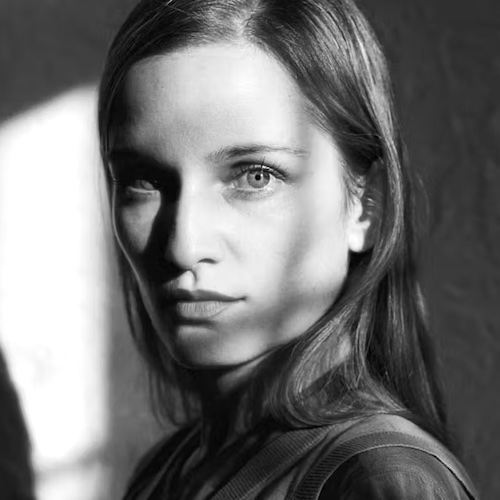
Iva Radivojević is an artist and filmmaker who currently divides her time between Athens and Lesbos. Iva’s films have screened at the New York Film Festival, Locarno FF, New Directors/New Films, Rotterdam IFF, CPH:DOX, Jeonju IFF, Berwick Film & Media Arts Festival, DocLisboa, Museum of Modern Art (NYC), Thessaloniki Biennale of Contemporary Art. She is the recipient of the Sundance Art of Non-Fiction Fellowship, Guggenheim Fellowship, NYFA and Princess Grace Film Fellowships. Her new book When The Phone Rang was recently published by red herring press in the UK. She’s a PhD candidate at Villa Arson in Nice.

Artist and filmmaker Deborah Stratman makes work about power, experience, history and belief, exploring how places, ideas, and society are intertwined. She regards sound as the ultimate multi-tool and time to be supernatural. Recent projects have addressed freedom, surveillance, public speech, sinkholes, levitation, orthoptera, raptors, comets, the electromagnetic spectrum, evolution, extinction, exodus, sisterhood and faith. Stratman’s films and artworks have been exhibited and awarded widely. She is a recipient of Fulbright, Guggenheim and United States Artist Fellowships, the Herb Alpert Award in the Arts, Sundance Art of Nonfiction Award and grants from Creative Capital, JustFilms, Jeonju Cinema Project, Graham Foundation, Harpo Foundation, Shifting Foundation and the Wexner Center for the Arts. She lives in Chicago where she teaches at the University of Illinois.

Corina Copp is a poet, writer, translator, and curator invested in the movement across artistic discipline in relation to material collaboration, itinerancy, recuperation, and process. She is the author of the poetry collection, The Green Ray (2015, Ugly Duckling Presse); and the North American translator of the memoir, My Mother Laughs (2019, The Song Cave), and the play, Night Lobby, both by filmmaker Chantal Akerman. She has written about film, art, and literature for Frieze, Cabinet, Film Comment, BOMB, Film Quarterly, Metrograph Journal, America: Films From Elsewhere (2019, The Shoestring Press), and elsewhere. In 2021, she founded Rotations, a film-screening series focused on the detours of nonfiction feminist filmmaking and artist cinema. She received her MFA in Playwriting at Brooklyn College – CUNY and is a doctoral candidate at the University of Southern California’s School of Cinematic Arts. She lives in LA, where she is Special Faculty at the California Institute of the Arts School of Film/Video.

Jay Rabinowitz (ACE) has enjoyed a long creative collaboration with Jim Jarmusch. Their work together includes The Limits of Control, Broken Flowers, Coffee and Cigarettes, Ghost Dog: The Way of the Samurai, Year of the Horse (which received an American Cinema Editors Award nomination), Dead Man, Night on Earth, and the “INT. TRAILER. NIGHT.” segment of the Ten Minutes Older series of short films. Jay was an apprentice and assistant editor on Jim’s earlier films, Down By Law and Mystery Train.
His credits as film editor also include Darren Aronofsky’s Requiem for a Dream, Terrence Malick’s The Tree of Life; Todd Haynes’ I’m Not There; Curtis Hanson’s Academy Award-winning 8 Mile; Paul Schrader’s Academy Award-winning Affliction; Keith Gordon’s Mother Night; Lodge Kerrigan’s Clean, Shaven; Shirin Neshat’s Women Without Men; and Oren Moverman’s Rampart.
He also functioned as music editor on Explicit Ills; Bomb the System; Weapons; Big Bad Love; Requiem for a Dream; When Pigs Fly; The Limits of Control; Broken Flowers; Coffee and Cigarettes; and Ghost Dog: The Way of the Samurai.
In honor of the Motion Picture Editors Guild’s 75th anniversary in 2012, CineMontage compiled a list of the 75 Best Edited Films of all time, as chosen by the Guild membership. Jay Rabinowitz is one of the few editors to have two films selected for inclusion on this list.

UnionDocs is grateful for support from:

Shop our Gift Registry and name an item to be honored as a part of UNDO history. Learn more about this ambitious renovation of our new permanent headquarters and artist residency in Ridgewood, Queens!
Free access to in-person events, and access online to watch some of the most hard-to-find and groundbreaking documentary films from around the world. Plus select workshops, artist talks and event conversations from our programs.