Views Navigation

Event Views Navigation

Today

Documentary Fundamentals Planning

With Nicole Page, Sam Cullman, and Chai Vasarhelyi. What are the essential business and legal issues to consider as you plan your documentary film? What can you do now to avoid problems later? Do you need an LLC? What is E&O insurance? This session covers issues of legal rights and clearances, business basics for filmmakers, budgeting, structuring agreements for talent and crew, and more.

Documentary Fundamentals Financing

With Tracie Holder, Sarah Meister, David Koh, and Chai Vasarhelyi. This session will address the eternal question: how to finance your doc? What are the pros and cons of different fundraising models (grants, equity investment, pre-sales, crowdsourcing)? We will also have veteran independent film accountant Fred Siegel to talk about tax ramifications and planning around financing as well as investor relations. Budgeting, how to find and successfully apply for grants, tips and tools for crowdfunding and other approaches to getting funded will be discussed in addition for this can’t-miss session.

Documentary Fundamentals Shooting and Directing

With Heidi Ewing, Kirsten Johnson, and Chai Vasarhelyi. Documentary filmmakers produce and shoot in a wide variety of locations under many different practical, financial, technical and legal constraints. What kind of equipment do you need? Who do you need on your production team? How do you deal with emergencies during shooting and how do you pick out a camera and DP? Should I be thinking of archival material in advance?

Documentary Fundamentals Editing

With Bob Eisenhardt, A.C.E., Tom Fleischman, Deborah Wallach and Chai Vasarhelyi. How can documentary directors work effectively with editors, sound designers, and other essential post-production talent? How does a story emerge from a pile of footage? Can you really “fix it in post”? What is an online edit and can you do it yourself? How does a good sound designer work, and how does post-production sound enhance your documentary

Documentary Fundamentals Graphics, Music, and Transmedia Campaigns

With Adnaan Wasey, Kina Pickett, J. Ralph and Chai Vasarhelyi. How can title design and graphics be effectively utilized in documentary? What about my approach to music? What is transmedia and why should documentary filmmakers pay attention to it? This session will dig in to graphics and music issues that come together during post production. We will also explore broad strokes of how to plan and execute transmedia campaigns.

Documentary Fundamentals How to Release Your Documentary

With Ryan Werner, Ed Arentz and Chai Vasarhelyi. How can you find and build audiences for your film? How do you know if your film is best suited for theatrical, broadcast, or both? How do digital platforms affect “traditional” models of distribution and release? How can you best utilize your film festival campaign? What does a sales agent do and how do I get one? Another can’t-miss session!

Field Visits for Chelsea Manning

With Lance Wakeling and Karl McCool. This first-person travelogue maps the surrounding areas where former Army intelligence analyst Chelsea Manning was imprisoned before her trial for releasing classified documents to Wikileaks. In an attempt to piece together disparate landscapes and events into a larger narrative, this essay film tracks Manning's places of detention from Kuwait to Virginia, Kansas, and Maryland. Following in the footsteps of Adachi's theory of landscape and the peripatetic tradition of road movies, Field Visits for Chelsea Manning reflects a landscape of mass-detention, endless war, whistleblowers, and America's unresolved history of race.

Little Raptures for the Uncommitted and Fissures by Patrick O’Hare

NYC Premiere Filmmaker Patrick O'Hare is interested in the sidelong glance at the world and the natural elisions and illusions found there, as well as those created through the editing of vastly disparate subject matter. Utilizing the language of merging and omission that can alter time, allowing reality to slip, hinting at the invisible. The aim is to reveal a state of mind investigating, coalescing, faltering and fusing into its own landscape. That recognizes and embraces the half seen, flashes and slow reveals of perception. Attuned as possible to phenomena of light, stasis, form, movement and the echoes of intimation. Through the cracks something startles and vanishes, the shape shifting riddle of inside and outside. Obliquely, these films try to convey the poignancy of the abstracted universe we move through, inhabit and have become inured to.

Through His Documents: Remembering Christopher Lee

with curator Leeroy Kun Young Kang and scholar and public health research scientist Sel J. Hwahng his program highlights the documentary work of late transgender filmmaker and activist Christopher Lee. Lee’s first film, Christopher's Chronicles, a record of the artist’s transition from female to male was among the very first films made by and about a transgender man of color and premiered at the 1997 Frameline Festival. Through his use of interviews, video collage, and music (including transgender artist Chloe Dzubilo's band, Transisters), Lee’s second feature documentary film, Trappings of Transhood focuses on the stories and lived experiences of a multi­racial group of transmen who candidly share their experiences of negotiating issues of race, ethnicity, sexuality, gender, and the medical industry within their process of transition. Trappings of Transhood was the first known feature­length work to document the experiences of transmen, and has been screened internationally. This will be both the first NYC screening of Lee’s two documentary films since his death in 2012 and within an NYC festival setting since 1997.

Spacetime Singularities

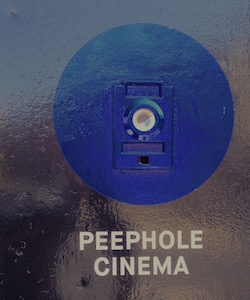
Elle Burchill and Andrea Monti Spacetime Singularities is a program of new moving image works made for the occasion of Peephole Cinema by Bradley Eros, Sarah Halpern and Andrew Lampert. The works, hand shot by each artist in the darkness – of a cave, a nightclub and on the streets of NYC in the wee morning hours – collapse sensations and sounds into a single focus viewing experience in which stalactites appear as sonograms, Kenneth Anger conducts a ceremony on the theremin, and liquid nitrogen tanks become ticking time bombs in the city’s rain-slicked streets. – EB & AM

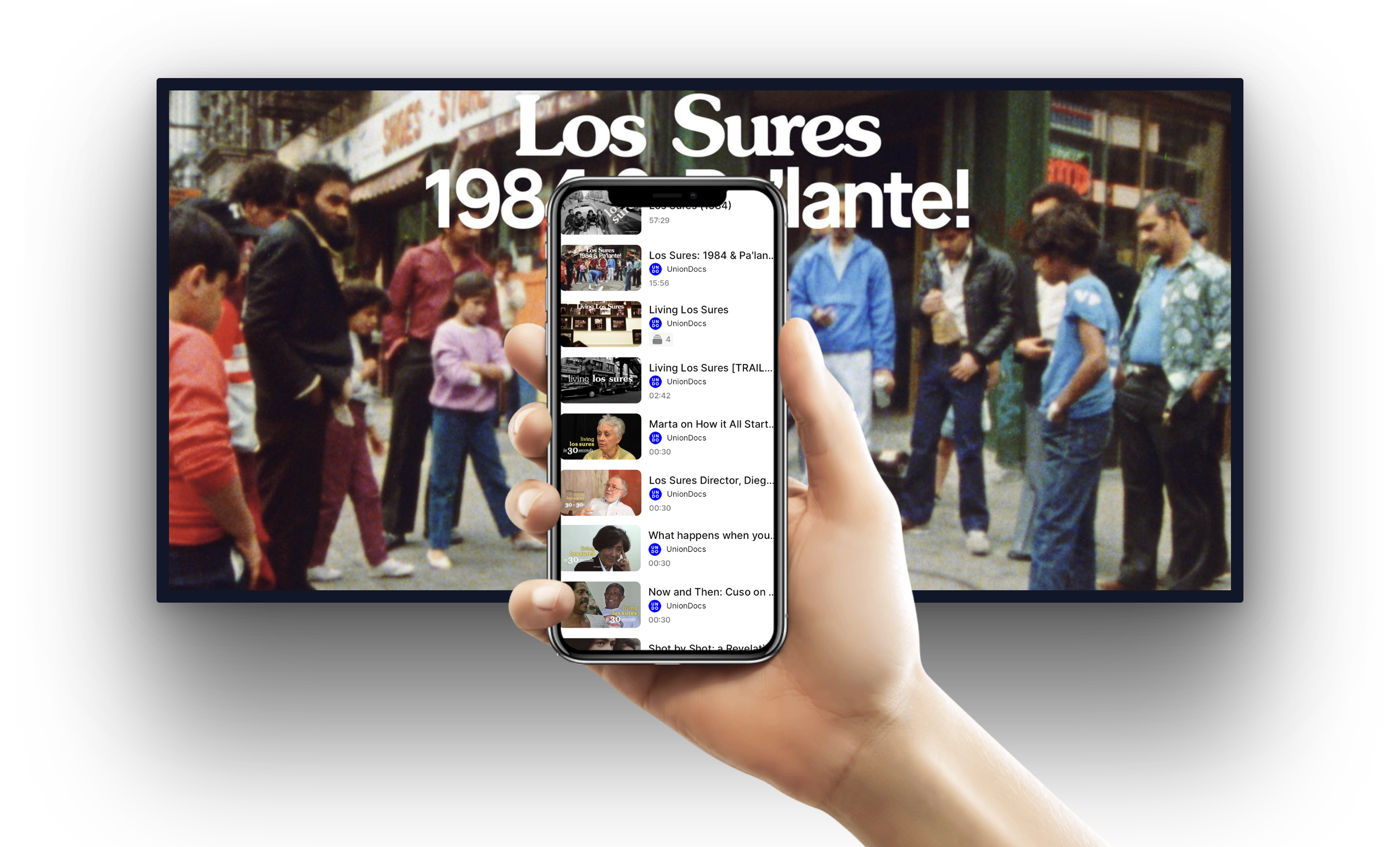
Los Sures (1984) at BAM

One night only. With director Diego Echeverria. Come see the film that inspired UnionDocs' Living Los Sures project on the big screen. The original film from 1984, Los Sures, will be screened at the Brooklyn Academy of Music Rose Cinemas on Sunday, July 26th in two showings: 2pm and 6:30pm.

Tomorrow We Disappear

Q&A with director Adam Weber At first glance, the Kathputli Colony looks like any other Indian slum. Flies swarm its putrid canals. Children climb on drooping electrical wires. Construction cranes and an ever-expanding metro line loom on the horizon. But Kathputli is a place of fading traditions. For half a century 2,800 artist families have called its narrow alleyways home; there are jugglers and acrobats, puppeteers and painters, folk singers and magicians, many of whom are well-respected artists in India and abroad. In 2009 the New Delhi government sold Kathputli to developers for a fraction of its worth. The land is to be bulldozed to make room for the city’s first-ever skyscraper, The Raheja Phoenix. Tomorrow We Disappear, directed by Jimmy Goldblum and Adam Weber, follows three of Kathputli’s most-talented performers as they wrangle with the reality of their approaching eviction. The story begins with the fate of thousands of marginalized performers in Delhi, India. The film chronicles a turning point in the lives of these performers, with the hopes of anticipating what’s to come in India’s future and preserving what’s being left behind.

Kiss Me, Gentlemen – In Pursuit of Realness

With Chelsea Knight, Jess Wilcox, & Minou Norouzi. Our bodies belong to others; parents first, then lovers. A mother’s body belongs to her child. We are subjected to education systems; consumer desires demand to be satisfied through contracts of labor. Our bodies belong to institutions; institutions for criminals, the sick, and the insane; institutions in the end too, for all of us, via the medical, care, and funerary systems. When we agree to participate in films, our bodies belong to the filmmaker. A contractual agreement places the image, sound – and by metaphorical extension – the body, in the ownership of the filmmaker. Its care is entangled with the politics of filmic history and filmic experience. The filmmaker’s own body is also invested, navigating space, time, and the ‘contaminated projections’ of their own ideologies. As we watch carefully, or repeatedly, our knowledge may be ruptured, our feelings disturbed. In one way or another all the films in this program deal with the mechanisms and technologies of entrapment: the destitute body, the incarcerated body, the body as a self-replicating system, bodies of soldiers performing military rituals, Greek mythology made contemporary through performative acts of defiance. Strategies in the pursuit of ‘realness’ range from injecting humor; others incite horror, follow a performative impulse, or straddle precariously on the ethical tightrope of representation. All point powerfully towards the condition of embodied subjects that have become specular, schizoid, internally disjointed.

MADE AT KUVA – Moving Image from Helsinki

Curated by Caspar Strake When thinking of Finnish culture, moving image arts in particular, one should avoid thinking of melancholia, or silence, or darkness, or the forest, and definitely not of ultra-dry humor. Everything else is very much preferred. Despite any undeniable pre-conceptions of Finnish moving image art, this program invites viewers to discover a Finnish cultural identity that defined itself in-between the prevalent set of century-old clichés, situated among such large topics as narrativity, affect, and the sublime. These aspects reverberate in this collection of such contrasting films as a documentary of blind people in a ultra-gentrified Helsinki neighborhood (Anu Pennanen) and performative interventions in a traditional cultural rituals (Pilvi Takala). The commonality amongst the films of this program is the place of the program's production: Kuva is the short form of “Kuvataideakatemia,” the Finnish Academy of Fine Arts. Since 2012 I have taught the moving image as part of the Academy's Time and Space Arts program - an employment that made me move from New York to the miraculous, wonderful Helsinki. This program is a small part of a larger research project and screening series at Kuva. The selected work shown here spans over the past three decades, and includes work by artists who have studied at and/or graduated from the academy, such as internationally-recognized alumni Eija-Liisa Ahtila and Salla Tykkää. This concept offers a rare look at the very first works by some of Finland’s most sophisticated moving image artists. It is especially attractive to a foreign audience to study the creative origins of Ahtila and Tykkää, and to recognize their (and others') early emerging artistic signatures.

The River of Life

Cinema on the Edge with Yang Pingdao Yang Pingdao is one of China’s most exciting emerging filmmakers. His astonishingly creative camera eye brings unexpected beauty to his new feature length film. Using an innovative structure, based on the distinctive texture of family memory through space and time, Yang invents something poised delicately between fiction and documentary to capture crystallized moments in his family history, to recreate in cinematic form its emotional weight and variety, woven around the life and death of his grandmother, and the birth of his child. In order to combine extended family chronicle, implicit national history, and intimate soul-bearing autobiography, Yang employs gentle formal experimentation to invent new cinematic pathways.

Spark

Cinema on the Edge with Andrew J. Nathan Probably China’s most important unofficial historian-filmmaker, Hu Jie documents with his camera episodes that Chinese official history, for now, ignores. Spark was an underground magazine published in 1960 by four young intellectuals who wanted to expose the devastating famine caused by Mao’s Great Leap Forward, a horrendous period of national suffering that is still unmentioned in China’s history textbooks today. This is filmmaking as urgent historical investigation: with a shoestring budget Hu combines years of research, and a knack for getting people to talk without fear about the most taboo subjects in China’s recent past. His alternative oral history approach knits together courageous and frequently moving interviews with the magazine’s surviving editor, supporters, and readers, who were ready to sacrifice themselves to alert their countrymen to unprecedented disaster.

STRATUM 1: THE VISITORS

Cinema on the Edge Poet and filmmaker Cong Feng started to film a documentary about whole-scale urban demolition in the Beijing suburb of Tongzhou, but discovered that the extraordinary rapidity of change and the furious power of China’s history of destruction required something more experimental, more essay-like. From hallucinatory (are they perhaps utopian? despairing?) images of a bulldozer seeming to conjure up a building from its rubble, we follow two characters wandering through debris, telling stories of childhood trauma (featuring canine, not human loyalty during a horrific episode from the Cultural Revolution). Cong, like a visual paleo-geologist, unearths surreal, chilling images of otherworldly beauty emanating from the buried strata of this collapsing world, whose history threatens to be suffocated by layers of experience, of loss, of unremembered suffering.

I Want to be a People’s Representative

Cinema on the Edge Can a documentary camera be a tool for democracy in China? Jia Zhitan certainly thinks so, and wields his camera like an anti-bureaucratic weapon. Jia, a member of Caochangdi’s influential Villagers Documentary Project (organizer Wu Wenguang has been training local villagers to use digital video cameras to record their participation in ultra-local politics), wants to run to be a delegate to the National People’s Congress. He wins the first round, but is deemed unqualified by officials for reasons they keep to themselves. As the irrepressibly scrappy and stubborn Jia seeks explanations and redress from ever higher levels of authority, he records their interactions scenes that would play as entertaining satiric comedy if they weren’t so frustratingly real.

Satiated Village

Cinema on the Edge with Zou Xueping Zou Xueping’s took her first documentary The Hungry Village (part of Caochangdi Workstation’s Folk Memory Project) — made up of first-person testimony about the effects of the Great Famine of 1960 (see Hu Jie’s Spark for another view) on her home village in Shandong — back home to show her subjects. They unanimously disapproved. Frustrated and full of doubt, Zou then made this second documentary discussing the villagers’ reactions to her first. This wonderful, searching, self-reflexive film questions the necessity and usefulness of truth-telling via cinema, when it brings pain and even shame upon neighbours and family. Zou’s 9-year-old niece emerges as its star, a girl who can balance competing exigencies of truth and love with a wisdom beyond her years.

Memories of the Future

US National Premiere presented by Cinema Tropical. US National Premiere, presented by Cinema Tropical. Memories of the Future, Rodrigo Reyes, 2009-2012, 70 minutes A woman writes increasingly passionate love letters without answer. Her passion and frustration are interwoven with a sense of impending doom, a vision of the coming Mexican apocalypse. A single personal tragedy mirrors the struggle of an entire country trying, in the midst of increasing chaos, to find itself. Winner of the LCI AWARD at the 2012 FICUNAM Film Festival. Following the screening, there will be discussion between Cinema Tropical's Carlos Gutierrez and director Rodrigo Reyes. Following the discussion will be a birthday party at UnionDocs for Gutierrez and open to all attendees. A note from the director: I shot this film on a shoestring over several months on the road, living in the back of a minivan. Memories is a catalogue of my concerns and struggles, a deliberate digging into shadows of the Mexican soul, a mad universe of visceral images and characters on the edge of reality. This is the film’s first public screening in the US. I feel anxious and confused by the context. On the one hand, this work was my very own film school, raw and incredibly painful. On the other, I don’t ever want to see it again because I may find that I have not strayed too far from its universe.

Peek in the window of our bustling building in NYC and tune into the ideas and energy bubbling up from the UNDO Center.

Tune into cutting-edge, powerful and poetic documentary programs and connect to conversations with the artists and thinkers passing through.

Now available at the Apple Store.

MONTHLY


Unlimited access to all of our monthly offerings for the price of two espressos.

ANNUALLY


Keep it simple and save. Unlimited access to our sweet offerings for a reduced, annual fee and receive some added benefits.

LOCAL, ARTIST, STUDENT OR SENIOR


In the neighborhood, a working artist, student or senior? This membership is for you. Fill out a quick form for a discount code to an annual membership.

ANNUAL EDITIONS MEMBERSHIP


Get all of the benefits of the Annual UNDO Membership plus an annual subscription to UnionDocs Editions, a set of publications, merchandise or special objects.

UnionDocs is grateful for support from:

Help celebrate our 20th Anniversary!

Shop our Gift Registry and name an item to be honored as a part of UNDO history. Learn more about this ambitious renovation of our new permanent headquarters and artist residency in Ridgewood, Queens!

Become an UNDO Member!

Free access to in-person events, and access online to watch some of the most hard-to-find and groundbreaking documentary films from around the world. Plus select workshops, artist talks and event conversations from our programs.