Meet the UNDO Fellows
UnionDocs is honored to share the selection of artists and writers for the UNDO Fellowship. A chance to explore their research topics a bit below.
Eric Baudelaire and Erika Balsom
Scholar Erika Balsom and filmmaker Eric Baudelaire propose to explore how the revolutionary languages of the 1960s and 1970s – languages of documentary filmmaking, artistic expression and political action alike – resonate today. How have the energies of this moment persisted and mutated? How can they provide a resource for thinking through the urgencies of the present, for the future? In a moment when hope for political transformation feels increasingly necessary, what forms and acts can best respond to the need to re-imagine reality? View UNDO Study Group Trailer.
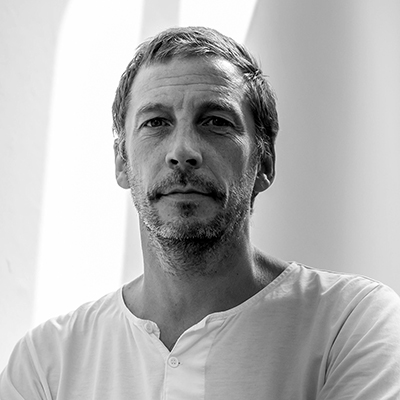
Eric Baudelaire (b. 1973, Salt Lake City) lives and works in Paris, France. After training as a social scientist, Baudelaire established himself as a visual artist often focused on social and historical research. Since 2010, he has devoted himself more seriously to filmmaking. His feature films include Also Known As Jihadi (2017), Letters to Max (2014), The Ugly One (2013) and The Anabasis of May and Fusako Shigenobu, Masao Adachi and 27 Years Without Images (2011).
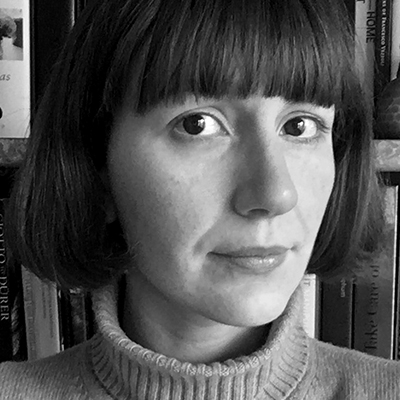
Erika Balsom is senior lecturer in Film Studies at King’s College London. She is the author of After Uniqueness: A History of Film and Video Art in Circulation and Exhibiting Cinema in Contemporary Art, as well as the co-editor of Documentary Across Disciplines. She contributes to magazines such as Artforum and Frieze, and has published in scholarly journals including Cinema Journal and Grey Room. In 2018, she was awarded a Leverhulme Prize and the Kovacs essay award from SCMS.
James N. Kienitz Wilkins and Matthew Shen Goodman
Writer and editor Matthew Shen Goodman and filmmaker James N. Kienitz Wilkins ask what is the value of appropriation today? While the term has become shorthand for a singular kind of cultural misappropriation, creative adoption in film, art and writing has also been a radical gesture of critique and a means of drawing attention to conditions of production. By tracing a genealogy inside and outside of film and rethinking the potential of such acts, they hope to develop a discourse around appropriation that would enliven it as a tool for artists, activists, and anyone else considering the politics of claiming something as one’s own. View UNDO Study Group Trailer.
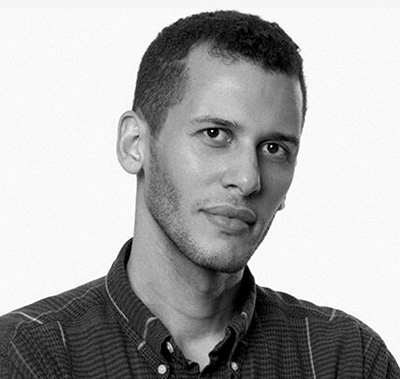
James N. Kienitz Wilkins is a filmmaker and artist based in Brooklyn. His work has premiered at international film festivals including Berlin, TIFF, Locarno, Rotterdam, NYFF, CPH:DOX, BAMcinemaFest, New Directors/New Films, and beyond. In 2017, he was included in the Whitney Biennial and a retrospective of his work was showcased at RIDM (Montréal). He has had solo exhibitions at Gasworks (London), Spike Island (Bristol, UK) and currently, Kunsthalle Winterthur (Switzerland).
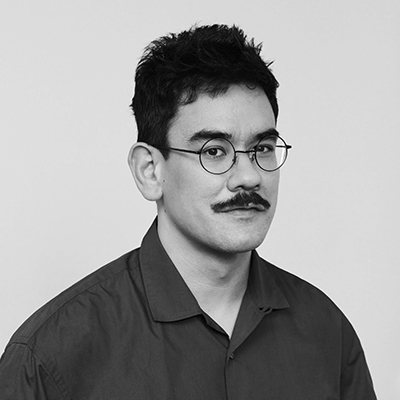
Matthew Shen Goodman is a writer and a senior editor at Triple Canopy.
Madeleine Hunt-Ehrlich and Nzingha Kendall
Film scholar and programmer Nzingha Kendall and filmmaker Madeleine Hunt-Ehrlich propose to explore alternative narrative-making grounded in radical black intellectual production, responding to what Saidiya Hartman refers to as “silence in the archive.” They ask how can black storytellers work in the realm of reality when traditional records of reality historically rendered black subjecthood invisible? How might the transparency imposed on minoritized subjects be resisted by employing gaps and fragments to achieve strategic opacity? By interrogating film form and genre, they seek to extend possibilities for moving images to resuscitate embodied, spiritual, and coded understandings of black experiences. View UNDO Study Group Trailer.
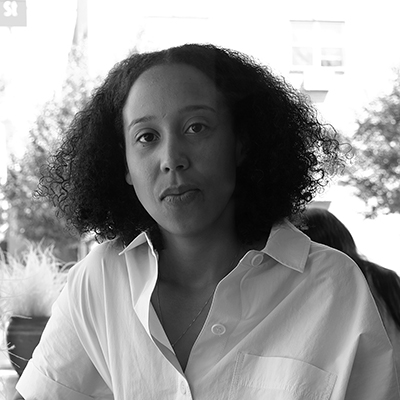
Madeleine Hunt-Ehrlich makes work about the private lives and worlds of Black women. Her practice is rooted in archival research and field research, which then gets translated through a writing process, and then finally a filmmaking process that includes narrative, documentary and experimental film techniques. This means working closely with archives that until recently did not preserve or respect black voices and thinking about how to represent histories that have been neglected.
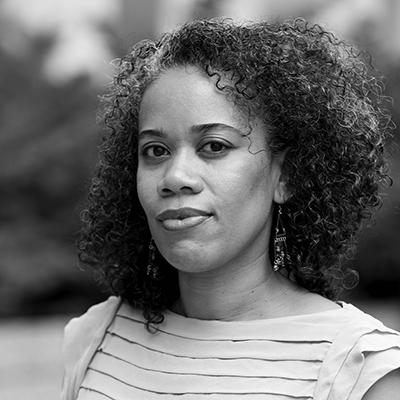
Nzingha Kendall is a film scholar and programmer. Her work focuses on moving images by black women from across the diaspora. She has a PhD in American Studies and is currently a postdoctoral fellow at the Carter G. Woodson Institute for African American and African Studies at the University of Virginia.
Dani and Sheilah ReStack and Steve Reinke
Essayist and artist Steve Reinke will join collaborative artists Dani and Sheilah ReStack to think through a queered phenomenological discourse of documentary practice that asks what an artist does with the world? Building from Restack’s “feral domesticity,” Reinke expands into an exploration of how “feral subjectivity” — a hybridized approach to filmmaking, one that mode-shifts between approaches — opens up a new set of possibilities for representing the endlessly complex plenitude of being in the world, and reinscribes that representation with the physical, sensual processes of an embodied existence. View UNDO Study Group Trailer.
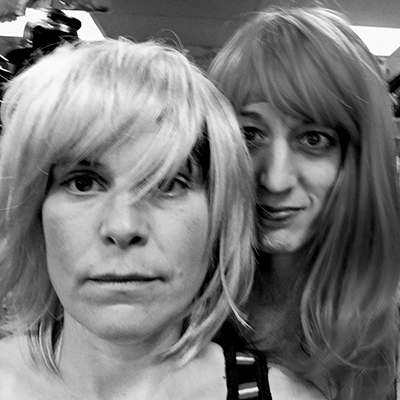
Dani and Sheilah ReStack have embarked on an artistic relationship that is formally and emotionally adjacent to their domestic lives, a quotidian zone they share with their young daughter Rose. Both artists have established careers on their own. Neither Dani’ video work or Sheilah’s multimedia performance and installation work could exactly prepare us for the force of the women’s collaborative efforts. – Michael Sicinski, CinemaScope, 2017. ReStack collaborations have shown at the 2017 Whitney Biennial, Iceberg Projects Chicago, Toronto International Film Festival, Images Film Festival, Toronto, Lyric Theater, Carrizozo, NM, Leslie Lohman Project Space, Gaa Wellfleet, New York Film Festival and The Columbus Museum of Art, Ohio. They have received grants from the Canada Council for the Arts, Ohio Arts Council and Visual Studies Workshop, NY. They have been residents at The Headlands in Marin County and their newest video Go Ask Joan was made at the MacDowell Colony this summer.
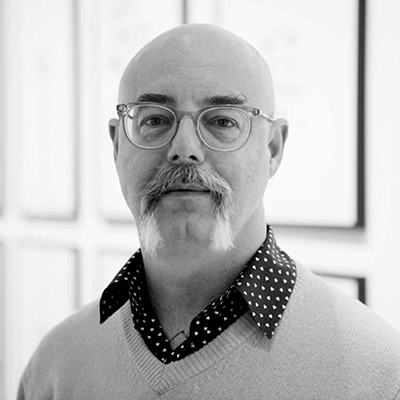
Steve Reinke is an artist and writer best known for his monologue-based video essays. He has authored two books, co-edited four anthologies, and written dozens of essays, mostly on artists’ film. He is a professor of Art Theory and Practice at Northwestern. His work is represented by Galerie Isabella Bortolozzi, Berlin.
Deborah Stratman with Sukhdev Sandhu
Author Sukhdev Sandhu and filmmaker Deborah Stratman will probe critical debates around the Anthropocene, monumentality, and the politics of audibility through an inquiry that looks to geology as an experimental pedagogy, an archive from which to ponder the ways in which our society dwells between past and future catastrophes. Drawing on speculative fiction as well as forensic non-fiction, their research will extend Stratman’s longstanding engagement with the politics of landscape. Fundamentally, they ask: how can we begin to formulate a progressive politics – or even a vision of the future – that does not pedestalize the human species?
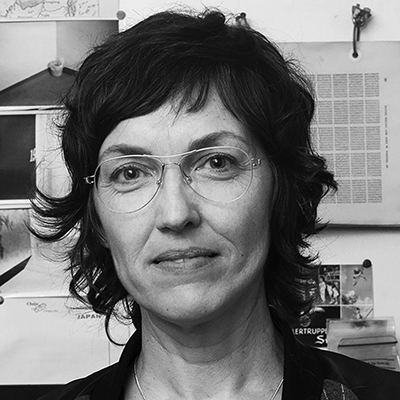
Deborah Stratman makes films and artworks that question power, control and belief, considering how places, ideas, and society are intertwined. She regards sound as the ultimate multi-tool, and time to be supernatural. Recent projects have addressed freedom, surveillance, broadcast, sinkholes, comets, raptors, orthoptera, levitation, exodus, evolution, sisterhood and faith. Stratman has exhibited internationally at venues including MoMA (NY), Centre Pompidou (Paris), Hammer Museum (LA), Austrian Film Museum (Vienna), MCA (Chicago), Whitney Biennial (NY), Flaherty Seminar and festivals including Sundance, Viennale, Berlinale, CPH:DOX, True/False, Locarno and Rotterdam. She is the recipient of Fulbright, Guggenheim and USA Fellowships, an Alpert Award and grants from Creative Capital, Graham Foundation, Harpo Foundation and Wexner Center for the Arts. She lives in Chicago where she teaches at the University of Illinois.
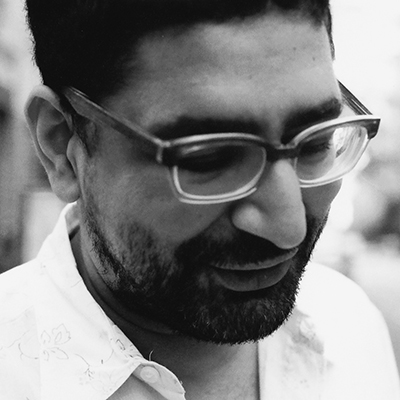
Sukhdev Sandhu is the author of London Calling: How Black and South Asian Writers Imagined a City (HarperCollins), I’ll Get My Coat (Book Works), Night Haunts (Verso), Other Musics (MoMA). His writings – on documentary and international film, experimental music, migrant aesthetics – have appeared in journals such as Film Comment, Frieze, Artforum, Art in America, The Wire, 4Columns, The Guardian, and Suddeutsche Zeitung. He is an Associate Professor at New York University where he also directs the Colloquium for Unpopular Culture.
Miryam Charles and Lakshmi Padmanabhan
How can the form of experimental documentary address the legacies of colonization as they are lived today? Scholar Lakshmi Padmanabhan and Filmmaker Miryam Charles will be following the routes opened up by this question, traveling and filming in India and Haiti (places of origin and belonging for them), to hear from women both dead and alive about their histories of survival and aesthetics of errantry. They will seek answers in the fissures between image and sound, personal narrative and political history, and in the juxtapositions between the dream of an anticolonial future, and the nightmare of our globalized present.
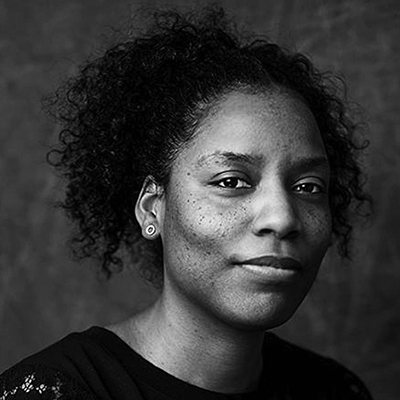
Miryam Charles is a director, producer and director of photography living in Montreal. She has produced and photographed several short fiction films as well as feature films. She is also the director of several short films which have been presented in various festivals in Quebec and internationally. She is working on her first feature-length documentary Cette maison (Talents en vue, SODEC), on short fiction film Au crépuscule (SODEC créateurs émergents), a fantastic series Jou va, jou vien (Banff/Netflix Diversity of Voices + Trio Orange) as well as a feature-length fiction film Le marabout (La forge Québec cinéma/Netflix + Voyelles Films). She is currently artist-in-residence at Concordia University and on the board of directors of RIDM, Dazibao and La Coop vidéo de Montréal.
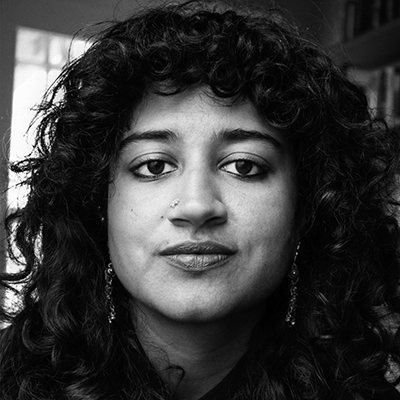
Lakshmi Padmanabhan is assistant professor in Radio/TV/Film at Northwestern University. She is co-editor of “Performing Refusal/Refusing to Perform,” a special issue of Women & Performance. Her teaching and research focus on world cinema and experimental film, postcolonial theory, feminist theory and queer theory. Her current book project addresses the ways in which feminist documentary artists from South Asia experiment with cinematic form in order to imagine a radical postcolonial ethics. Her academic writing has been published in journals including Camera Obscura and Art History, and she has contributed reviews and criticism to venues including Seen, Public Books, and Post45. She has programmed film and video at venues including BRIC Arts, AS220, and Magic Lantern Cinema.
Crystal Z Campbell with Ashon Crawley
Writer Ashon Crawley and artist Crystal Z Campbell will examine the various ways that ideas, stories, and narratives are collected and ask what happens when the things collected are ephemeral? They will imagine ways that knowledge about Black geographic translation—in its variance and shade, in its color and texture, in its weight and lightness, in its vibration and sound—moves, how it spreads. The sound of glances and glimpses, the sight of whispers and hushed words, is where their research resides. They ask if the sonic component in film is the augmentation of the relationship between remembering and forgetting, or is the sonic a way to get at the archive and what exceeds its capture? Campbell’s sonic-centered documentary work honors the untranslatable, strategies of opacity, and rumor. They will posit together if fragments and gaps in archives can act as historical conductors, offering new translations or urgent questions, around Black geography, land and body, and the public secrets embedded in landscapes.
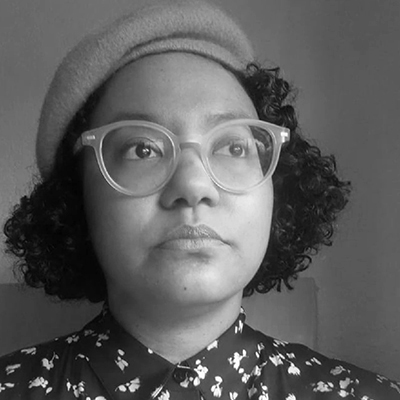
Crystal Z Campbell is a multidisciplinary artist, experimental filmmaker, and writer of African American, Filipino, and Chinese descents. Campbell finds complexity in public secrets—fragments of information known by many but untold or unspoken. Select honors include the Pollock-Krasner Award, MAP Fund, MacDowell, Skowhegan, Rijksakademie, Whitney ISP, Franklin Furnace, OVAC Art 365, and Flaherty Film Seminar. Exhibitions/screenings include SFMOMA, Drawing Center, ICA-Philadelphia, REDCAT, Artissima, Studio Museum of Harlem, Project Row Houses, and SculptureCenter, amongst others. Founder of archiveacts.com, Campbell was a 2020-2021 Harvard Radcliffe Film Study Center & David and Roberta Logie Fellow and is currently a Distinguished Scholar at the University of Buffalo. A 2021 Guggenheim Fellow in Fine Arts, Campbell lives and works in New York & Oklahoma.
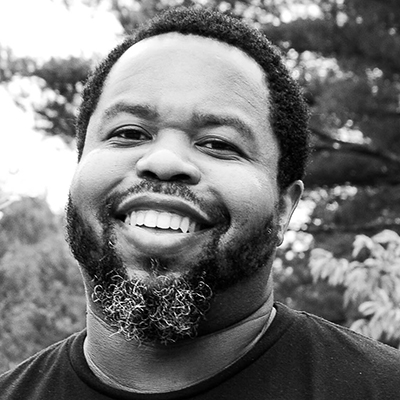
Ashon Crawley is a writer, artist and teacher, exploring the intersection of performance, blackness, queerness and spirituality. He is associate professor of Religious Studies and African-American and African Studies at the University of Virginia. His is author of Blackpentecostal Breath: The Aesthetics of Possibility (Fordham University Press) and The Lonely Letters (Duke University Press). He is currently at work on a book about the practice of contemporary Black life as a spiritual disposition, posture, gesture and relation; and a short story collection and a nonfiction volume, both about the Hammond B3 organ, the Black church and sexuality. A MacDowell interdisciplinary arts fellow, he is at work on an art installation featuring light sculpture and sound that serves as a memorial to blackqueer spiritual life, musicianship and erasures from official narratives.
Theo Jean Cuthand
“Since 1995 Theo Jean Cuthand has produced roughly thirty-five video works, often informed by a queer D.I.Y. tradition, and often departing from the first person. In these works, he frequently positions himself with extensive “I am …” statements, yet these statements aren’t meant to construct a static identity—they hold specific ties with a kind of non – linear time that is in contact with Indigenous ancestry as much as it responds to questions of locality. In regard to intersecting vectors of oppression, it is usually presumed that the various aspects of a person’s identity are stable, and that their specific intersections can be analyzed along solid markers of belonging such as class, race, gender, ability, and so forth. These notions become profoundly destabilized when reconsidered through Cuthand’s prolific practice. In their generosity, his video works offer deep insights into the necessarily unfinished business of building, understanding, and negotiating one’s own sense of identity.”
—Vika Kirchenbauer
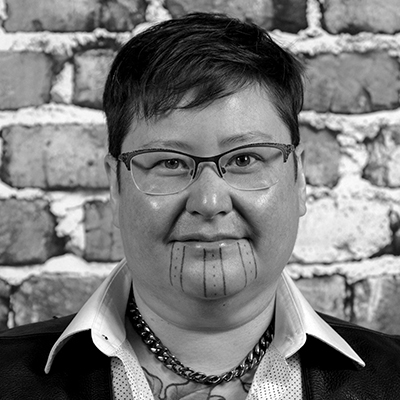
Theo Jean Cuthand was born in Regina, Saskatchewan, Canada in 1978, and grew up in Saskatoon. Since 1995 he has been making short experimental narrative videos and films about sexuality, madness, Queer identity and love, and Indigeneity, which have screened in festivals internationally, including the Tribeca Film Festival in New York City, Mix Brasil Festival of Sexual Diversity in Sao Paolo, ImagineNATIVE in Toronto, Ann Arbour Film Festival, Images in Toronto, Berlinale in Berlin, and Oberhausen International Short Film Festival. His work has also exhibited at galleries including the Remai in Saskatoon, The National Gallery in Ottawa, and The Walker Art Center in Minneapolis. They completed their Bachelor of Fine Arts majoring in Film and Video at Emily Carr University of Art and Design in 2005, and her Masters of Arts in Media Production at X University in 2015. He currently resides in Toronto, Canada.
Bo Wang with Rachael Rakes
Filmmaker Bo Wang and critic Rachael Rakes investigate spectrality as a material entity shaped in the present by memory, trauma, displacement, and extractions. Together, they seek to build from theory, history, and moving image’s foundational relation to hauntedness, they propose how today’s speculative documentary practice might have a unique capacity to render ghosts. More broadly, their investigation attends to land as time and space, material as animated, and ancestral relations as multiple spectral forms. From the phantasmatic figure populating Hong Kong’s hyper-capitalist and ephemeral urbanscapes in Wang’s work, to the persistent specter of Cold War-era policies, the ghost, in its temporal and spatial purgatories—reveals frameworks in the present that will haunt humanity until they are resolved.
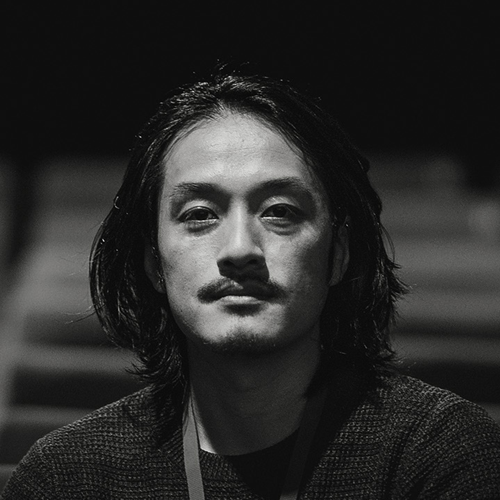
Bo Wang is an artist, filmmaker, and researcher based in Amsterdam. His works have been exhibited internationally, including at the MoMA, Guggenheim Museum, Garage Museum, CPH:DOX, IFFR, Visions du Réel, LUX, Open City Documentary Festival, Courtisane, Seoul Mediacity Biennale, Sonic Acts, Eye Filmmuseum, Sesc_Videobrasil, Sharjah Film Platform, among others. He is a recipient of major international awards, including New:Vision at CPH:DOX, Golden Dove at DOKLeipzig, O.F.F. Prize at Sesc_Videobrasil, Best Doc Short at Sharjah Film Platform, etc. He received a fellowship from the Robert Flaherty Film Seminar in 2013, and was an artist-in-residence at the ACC-Rijksakademie from 2017 to 2018, as well as at NTU Centre for Contemporary Art Singapore in 2016. He is currently a PhD candidate at ASCA, University of Amsterdam.

Rachael Rakes is a writer, curator, educator, and researcher. She was recently the Artistic Director of the 12th Seoul Mediacity Biennale, 2023. Currently Rakes is a Committee Member of the New York Film Festival, an Editor at Large for Verso Books, and a Contributing Editor for INFRASONICA.With Laura Huertas Millán and Onyeka Igwe, she organizes the artistic research initiative on co-subjective encounters, Counter-Encounters. From 2019–2022 she was the Curator for Public Practice at BAK basis voor actuele kunst, Utrecht. Until 2019, she was the Head Curator and Manager of the Curatorial Programme at De Appel in Amsterdam. Rakes teaches in the Artificial Times Masters department at Sandberg, on Curating the moving image at Leiden University, and taught recently for the Parsons School of Art, Zine Eskola, HKU, KASK, Eugene Lang College, and Harvard University. Rakes is editor of the publications This, Too, Is a Map (2023, Sema/[NAME]), Toward the Not-Yet (2021, BAK/MIT Press), and Practice Space (2019, [NAME]/De Appel) and frequently publishes as a critic and essayist.
Parastoo Anoushahpour, Faraz Anoushahpour, and Ryan Ferko, with Aruna D’Souza
Filmmakers Parastoo Anoushahpour, Faraz Anoushahpour, and Ryan Ferko, and critic Aruna D’Souza consider diaspora as a political possibility and productive model for unraveling and reconstituting the world. In the face of ongoing displacement and unprecedented scale of forced migration, they explore the aesthetic and narrative possibilities of movement and “unplacement” as an untethering from the political formations of the nation-state. Is it possible, materially and imaginatively, to harness such diasporic movement as a form of resistance?

Parastoo Anoushahpour, Faraz Anoushahpour, and Ryan Ferko have worked in collaboration since 2013. Their shared practice explores the interplay of multiple subjectivities as a strategy to address the power inherent in narrative structures. Foregrounding the idea of place as a central focus, their work seeks to both decode their surroundings and trouble the production of images through speculative narration and dialectical imagery. Shifting between both gallery and cinema contexts, recent projects have been presented at Mercer Union (Toronto), MoMA, e_flux, The Flaherty Seminar, Berlinale, Punto De Vista International Documentary Festival, Viennale, Media City Film Festival, New York Film Festival, Toronto International Film Festival, and elsewhere internationally.
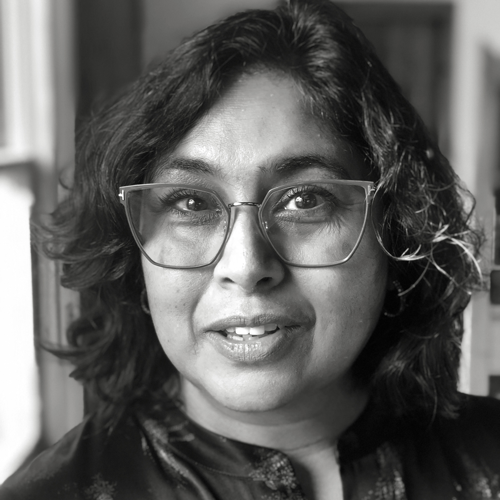
Aruna D’Souza is a writer and critic based in New York. Her work focuses on artists of the global majority and on art whose intersecting aesthetic and political possibilities allow us to imagine new, more just, more kind forms of life. Her new book, Imperfect Solidarities, was published in July 2024 by Floating Opera Press. Her work appears regularly in 4Columns.org, where she is a member of the editorial advisory board, and she is a regular contributor to the New York Times. Her book, Whitewalling: Art, Race, and Protest in 3 Acts (Badlands Unlimited), was named one of the best art books of 2018 by the New York Times. Recent editorial project include Linda Nochlin’s Making It Modern: Essays on the Art of the Now (Thames & Hudson, 2022) and Lorraine O’Grady’s Writing in Space 1973–2018 (Duke University Press, 2020); she co-curated the retrospective of O’Grady’s work, Both/And, which opened in March 2021 at the Brooklyn Museum.
Courtney Stephens with Julia Gunnison
In their collective reflection, filmmaker Courtney Stephens and film critic Julia Gunnison ask the question: How can nonfiction media contend with fantastical elements of the real? Rooted in Stephens’s ongoing exploration of geographic longing, private meaning, nationhood, and collage and hybrid forms, their research peers through the scrim of the failed dream of American progress and its attendant destabilization and media-produced fantasies, in search of a way forward. Considering long-standing insecurities, and assumptions, about documentary’s evidentiary status, they explore how the form interrogates, subverts, or succumbs to collective fantasies, and how alternative modes of documentary can confront beguiling mediations to engage with the instability of the now.
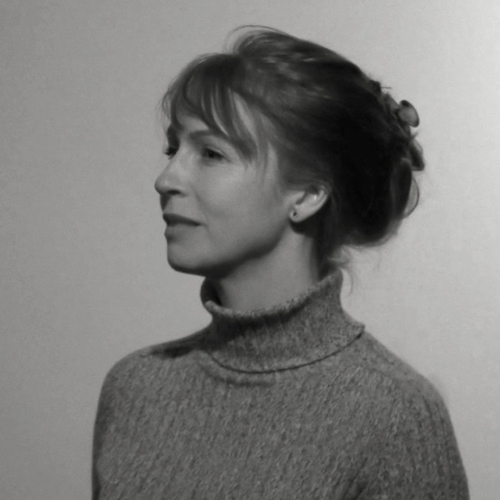
Courtney Stephens is a writer/director. Her work has explored historical geographies, the public unconscious, and the texture of women’s lives. The American Sector, her documentary (co-directed with Pacho Velez) about fragments of the Berlin Wall transplanted to the US, was named one of the best films of 2021 in The New Yorker. Her essay film, Terra Femme, comprised of amateur travel footage shot by women in the early-twentiethcentury, premiered at The Museum of Modern Art, and has toured internationally. Invention, a work of experimental fiction, recently premiered at the Locarno Film Festival. Her films have been exhibited at The National Gallery of Art, The Barbican, The Royal Geographical Society, Walker Art Center, the Thailand Biennale, and in film festivals including the Berlinale, Viennale, IDFA, Hong Kong, SXSW, and the New York Film Festival. She is the recipient of a Guggenheim Fellowship, a Fulbright Scholarship, and fellowships from MacDowell, Yaddo, and the Wexner Center.

Julia Gunnison is a writer, editor, and arts administrator based in Brooklyn, New York. Her essays, reviews, and interviews have appeared in Los Angeles Review of Books, Reverse Shot, Screen Slate, and Bright Wall/Dark Room, and her interests include nonfiction film forms and cinematic interpretations of urban space. She is an alumna of the 2024 Film at Lincoln Center Critics Academy, and the 2023–24 Reverse Shot Emerging Critics Workshop. She is the co-founder and editor of Syllabus, a weekly publication for nontraditional syllabi. Julia is currently the Artist Initiatives Manager at Creative Capital, and was previously Coordinator for the Sundance Documentary Fund. She serves as a grant application reviewer for the Sundance Institute, the International Documentary Association, and the Catapult Film Fund.
Travis Wilkerson with Victor Guimarães
Nearly sixty years after Fernando Solanas and Octavio Getino issued the call for a Third Cinema—a militant, revolutionary, anti-imperial, and internationalist intervention—critic Victor Guimarães and filmmaker Travis Wilkerson take up its unfinished, unfulfilled project to ask where its emerging forms might still be glimpsed. Their collaborative research takes them to Cuba, Mexico, Croatia, the Philippines, Cameroon and beyond, to seek out the legacies and active practitioners of a Third Cinema redefined by the technologies, means of production, and modes of distribution scaled to meet the urgent and ongoing political struggles of today.
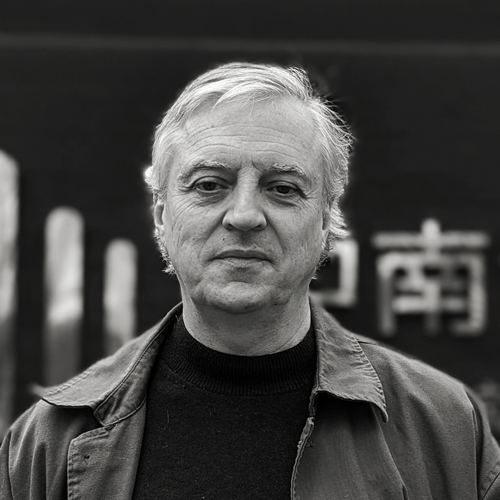
A chance meeting in Havana with the legendary Cuban filmmaker Santiago Alvarez changed the course of Travis Wilkerson‘s life. His internationally recognized body of filmmaking crosses boundaries with documentary and fiction, performance, and activism. At the epicenter of his work is the ongoing search for meeting points of aesthetic eloquence and political engagement, produced with an absolute modesty of material resources, as self-sufficiently as possible. In 2015, Sight & Sound called Wilkerson “the political conscience of American cinema.” His films have screened at hundreds of venues and festivals worldwide, including Berlin, Sundance, Toronto, and Locarno. The New Yorker called, Did You Wonder Who Fired the Gun? one of the “Sixty-Two Films that Shaped the Art of Documentary Filmmaking.” An Injury to One was named one of the best avant-garde films of the decade by Film Comment and a “political-cinema landmark” by the Los Angeles Times.