Nov 7, 2025 at 10:00 am – Nov 9, 2025 at 2:00 pm
Contested Realities:
From Field Work to Form
With Cathy Lee Crane, Jason Livingston, Nicole Antebi and David Taylor
Filmmaker Cathy Lee Crane leads this 3-day workshop exploring methods for translating complex field research into original documentary form. Accompanied by a stellar group of filmmakers, researchers and artists, we’ll be tackling multi-modal approaches to research and looking at innovative strategies for documentary project development: both conceptual and practical.
The research and development phase of documentary filmmaking is where ideas take shape in the field, but it’s also a challenging period that can contradict formal expectations, present representational obstacles and pose ethical boundaries. These difficulties are complicated further when dealing with sensitive subject matter like contested territories, or competing narratives and histories. Across the weekend we’ll be addressing these critical moments in a project’s development, diving into ethical frameworks for collaboration with research participants, interpretations of the archive and hybrid forms that innovate within and think beyond typical documentary distribution and exhibition.
We’ll be tackling thorny questions like: what kinds of research methods are best suited to this environment and these circumstances? How can multiple perspectives be best represented simultaneously, creatively and fairly? What kinds of frameworks for field research are useful and how can they be adapted to different circumstances? What forms are best suited to the stories emerging from the research and what kind of experimentation is appropriate? How do creative decisions affect the people implicated in this researched environment?
Cathy Lee Crane is no stranger to the struggles and difficulties associated with translating field research into original and hybrid documentary forms, working extensively in prisons and borderland areas, while considering the vast historical, cultural and scientific perspectives on the subject. Cathy will walk us through her own considerations of the limitless ways in which particular sets of images can be produced, combined and reorganized, sharing creative breakthroughs and formal discoveries from extensive archival research and on location field work. She’ll then be joined by media artists Jason Livingston, whose media art practice explores land use and the poetics of bounded life; David Taylor, who’ll discuss his inversion of the surveillance apparatus through drone footage of detention; and Nicole Antebi, her use of animation charting moving subjects like the meandering Rio Grande/Rio Bravo.
From the encounter with the image/sound archive to the flow of field work, from production to exhibition, this workshop aims to better equip emerging filmmakers with diverse tools for research in the field, leaving participants with a series of actionable nodes for directing research and development.
Details
Open to everyone, though the workshop setting is best suited for filmmakers, film producers, journalists, curators and media artists.
Give us an idea of who you are and why you are coming. When you register you will be asked for a short statement of interest that should briefly describe your experience and a film project (it would be great if you have a project in progress that you would present to the group during the work-in-progress critique sessions), plus a bio. There’s a spot for a link to a work sample (and CV, which would also be nice, but is not required).
$295 early bird registration ends on Oct 29, 2025.
$350 regular registration.
The deposit is non-refundable. Should you need to cancel, you’ll receive half of your registration fee back until October 29. After October 29, the fee is non-refundable.
In order to keep costs down, this workshop is a BYOL, i.e. bring your own laptop. Students must be fully proficient using and operating their computers.
To register for a workshop, students must pay in full via card, check, or cash . After the early bird registration deadline of October 29, course fees are not refundable or transferable and any withdrawals or deadlines will result in the full cost of the class being forfeit. There will be no exceptions. To withdraw from a course please email info-at-uniondocs.org.
In the event that a workshop does not receive sufficient enrollment, it may be canceled. Students will be notified at least 48 hours prior to the start of a cancelled workshop and will be refunded within 5 business days. If we reschedule a workshop to another date, students are also entitled to a full refund. UnionDocs reserves the right to change instructors without prior notification, and to change class location and meeting times by up to an hour with 48 hours prior notice.
Please note: Participants are accepted on a first-come, first-serve basis.
Schedule
Friday, 7th November
10:00am – 10:30am Welcome & intros
10:30am – 12:30pm Intro session with Cathy Lee Crane
12:30am – 2:00pm Lunch
2:00pm – 4:00pm Session with Jason Livingston
4:00pm – 4:30pm Wrap Up Discussion with Cathy additional exercises / discussion
Saturday, 8th November
10:00am – 10:30am Warm up, inspiring references, case studies
10:30am – 12:30pm Session with David Taylor
12:30am – 2:00pm Lunch
2:00pm – 4:00pm Session with Nicole Antebi
4:00pm – 4:30pm Wrap Up Discussion with Cathy, additional exercises / discussion
Sunday, 9th November
10:00am – 10:30am Warm up, inspiring references, case study, eye training.
10:30am – 12:30pm Creative work-in-progress feedback session with lead instructor
12:30am – 2:00pm Wrap up discussion with Cathy
Each day follows this general structure, with some minor variations and substitutions:
Warm up, inspiring references, case study, eye training.
Presentation by guest speaker + individual work-in-progress critique
Share / Discussion / Exercise
Presentation by guest speaker + individual work-in-progress critique
Workshop Exercise + Critique
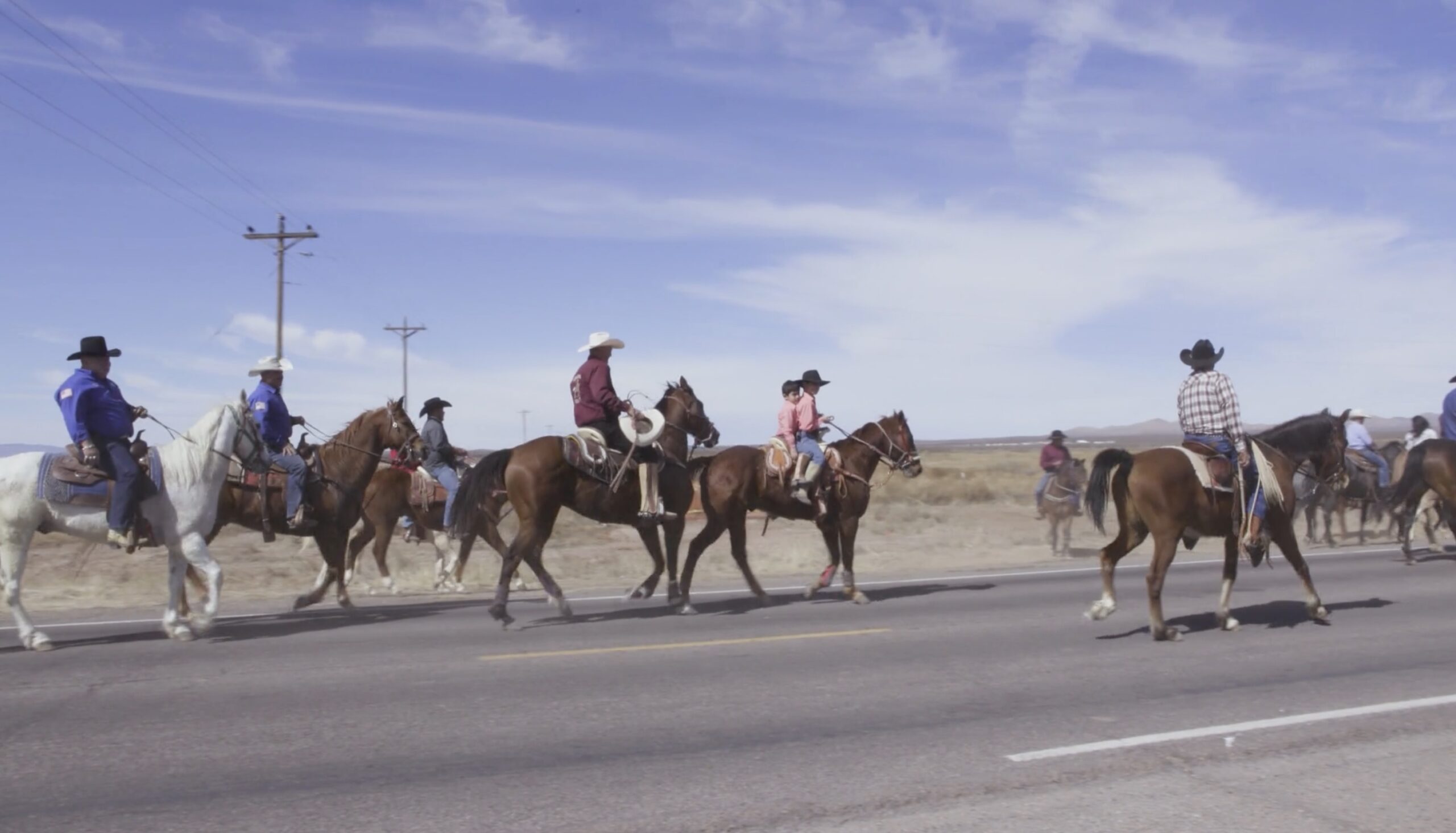
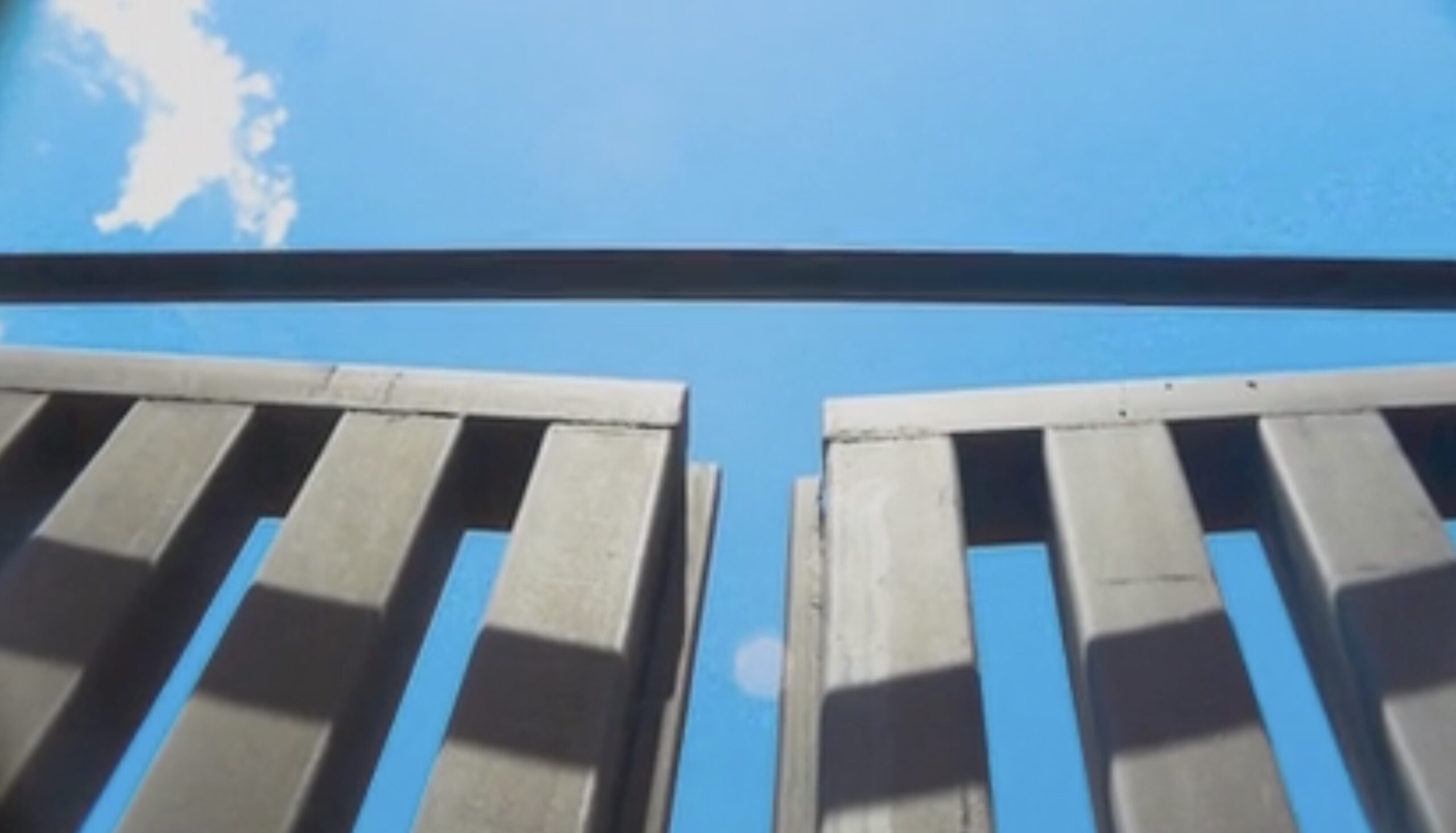
Cathy Lee Crane’s speculative histories involve extensive research in the archive and on location field work. Various discoveries have led to development strategies for production, collaboration, and ultimately the form of a completed project’s dissemination (single channels, installation, on-line interludes). These projects include: critical biography (Pasolini’s Last Words which will be presented at NYU Casa de Italiana on 11/10/25 alongside a new installation iteration of that research Pasolini : Durations with John Di Stefano from 11/3-11/13; prisons (research and cinematography for Farocki’s Prison Images); and the borderlands multi-platform work Drawing the Line which includes Crossing Columbus (2020), terrestrial sea (2023), and Border Dwellers (2025). This most recent and ongoing side of Cathy’s work in the borderlands explores it as an historical space, a place and a line of inquiry and is a preoccupation that all the guest lecturers share. Since 2017, Cathy has been working in various borderland areas, particularly in New Mexico and Arizona, while considering various historical, cultural and scientific perspectives on the subject. This subject has driven Cathy to consider the limitless ways in which particular sets of images can be produced, combined and reorganized to circulate in different ways in varying circumstances on different platforms, and how this might redefine the images(s) for different audiences.
Jason Livingston is a media artist and filmmaker, film programmer, and writer. His award-winning work has screened widely, including Sheffield, Camden, Rotterdam, Anthology, the Austrian Museum, and the Vancouver Art Gallery. Under Foot & Overstory is distributed by the CFMDC, and Lake Affect is available through EAI’s Experimental Television Center collection. Awarded residencies include the Millay Colony and the Virginia Center for the Creative Arts. He has received project support from funders such as the New York State Council on the Arts and the Simons Foundation.
David Taylor’s artwork examines place, territory, history and politics. Exhibited widely, his projects reveal how borders can function not only as spatial demarcations, but also as an amplifying device particularly attuned to changing geo-political, environmental and social conditions. Recent exhibition venues include the Boise Art Museum, Nevada Museum of Art, Utah Museum of Fine Arts, MFA Houston, Museo de las Artes Universidad de Guadalajara and the Smithsonian American Art Museum. Taylor’s work can be found in numerous collections including the Library of Congress, the Phoenix Art Museum and the Nelson-Atkins Museum. The Guardian, Places Journal, Gizmodo and Arquine have recently featured his projects. In 2019 Taylor was awarded a residency at Proyecto Siqueiros: La Tallera in Cuernavaca, Mexico and an Arizona Commission on the Arts Research and Development Grant. For his work on migrant detention, Taylor is a nominee for a 2025 Rocky Mountain Southwest Emmy and he has an upcoming solo exhibition at Museo de Arte de Sonora in the fall of 2026. David Taylor is a member of the Photography, Video and Imaging faculty in the University of Arizona School of Art and a faculty affiliate with the U of A Center for Latin American Studies.
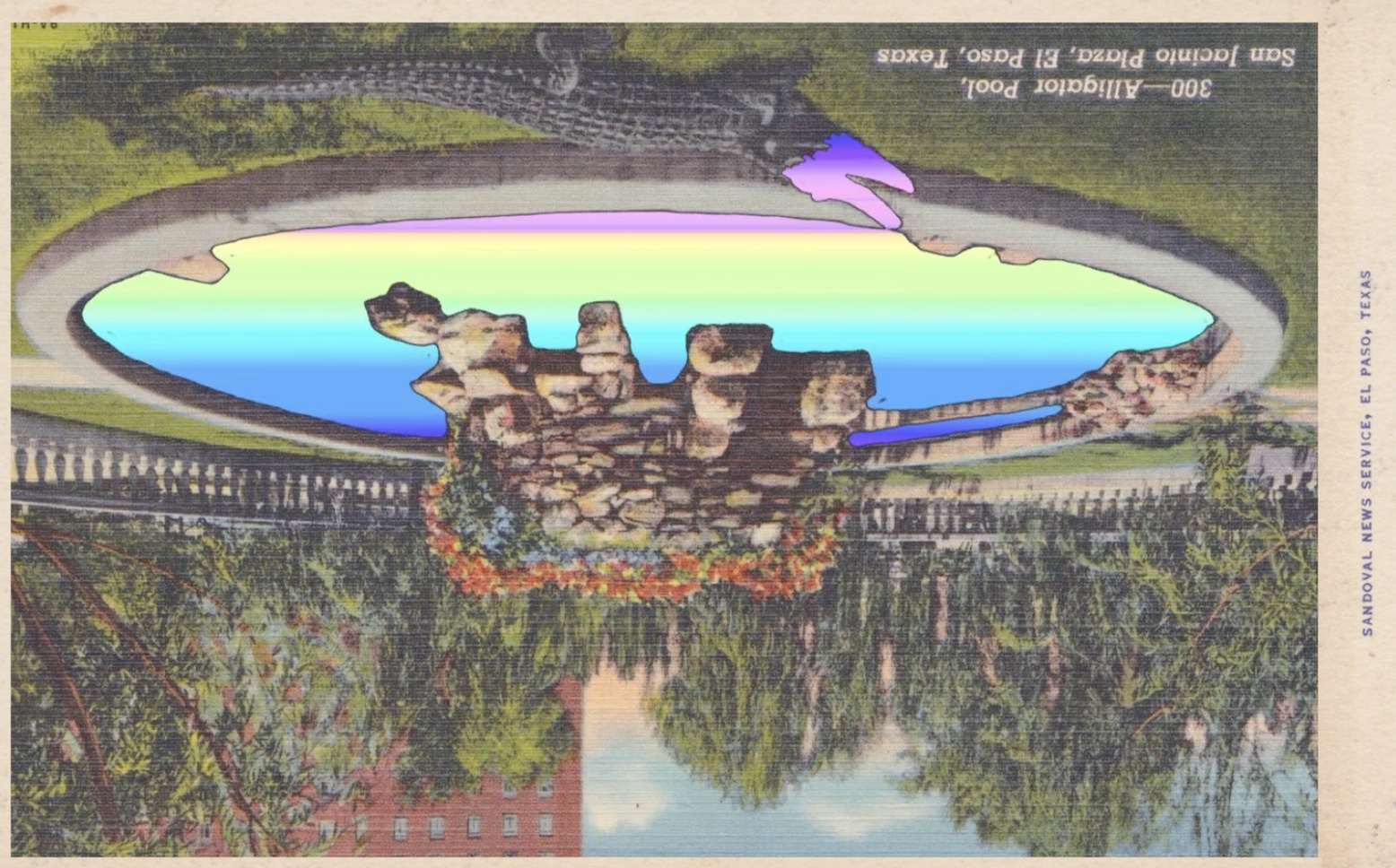
Nicole Antebi is an animator and moving image artist whose work explores the intersection of storytelling, place, and belief. Her practice is rooted in a deep curiosity about how different cultures-past and present-assign personhood, memory and mysticism to the land. Through animation, Nicole investigates place-based animism and the ways in which landscapes become vessels for knowledge, spirituality, and hope, especially for times of crisis. Driven by a desire to expand the language of storytelling, Nicole uses animation as a tool to bridge the seen and unseen-to animate histories, rituals and relationships that are often invisible or intangible. Her work invites viewers to consider how a place holds power, emotion, and ancestral presence. From a young age, Nicole became acutely aware of the inequities facing Mexicans, Mexican-Americans and Fronteriza/o/x/s who reside in the borderlands of El Paso, Texas and Ciudad, Juárez, the region where she came of age. In the years since she graduated from high school in 1993, following the signing of NAFTA, Nicole watched the two cities, that once shared the same name and continue to share the same community, become increasingly dissected by federal political, social, economic, and environmental policies designed to obstruct the movement of people, culture, and the river with two names. Nicole is an assistant professor of Animation at The University of Arizona and Co-director of The Wonder Studio at Biosphere II.